

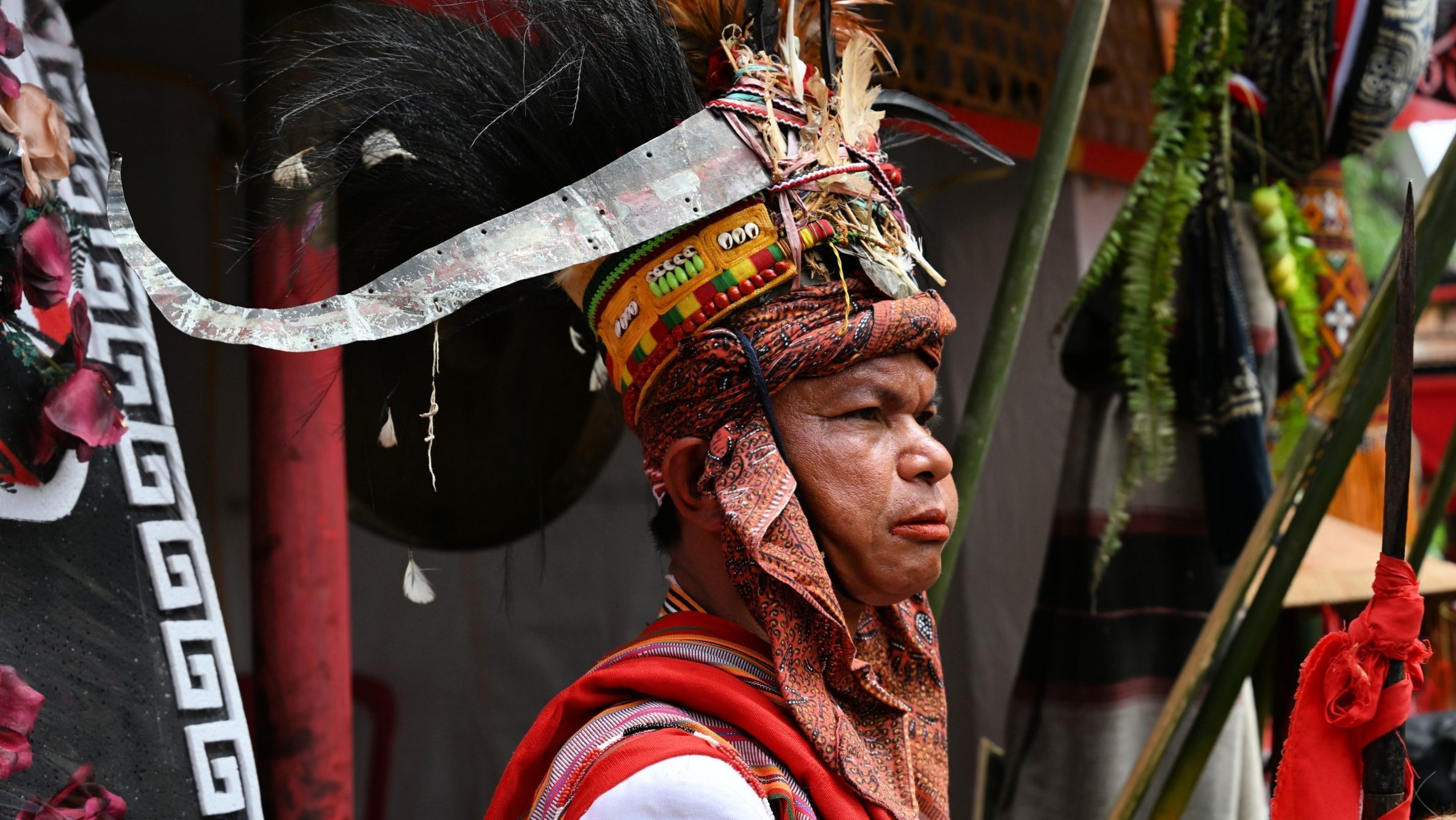
The sound of a squealing pig reached me before anything else. Walking up to the space where the Tana Toraja funeral ceremony was being held, I was not sure what to expect. My guide, Salim, had prepared me with facts, sure, but to see it and more notably, hear it was another thing entirely. For the family, this day was already two years in the making.
What followed was a full day inside one of the most elaborate funeral ceremonies in Indonesia.
- A 12-Hour Journey to Tana Toraja
- My Camera and a “Slop” of Cigarettes for the Family
- The Economics of Grief (Buffalo, Status, and Cost)
- A Scream, A Laugh, and a Mouthful of Betel Nut
- The Pain Behind the Pageantry (When Ritual Becomes Grief)
- The Heart of Torajan Hospitality
- Rambu Solo Explained: The Sacred Rituals of a Tana Toraja Funeral0p
- And Life Goes On
- Reflections on Tana Toraja: Looking at Death Straight On
- Visiting a Rambu Solo Ceremony: What Visitors Should Know
A 12-Hour Journey to Tana Toraja
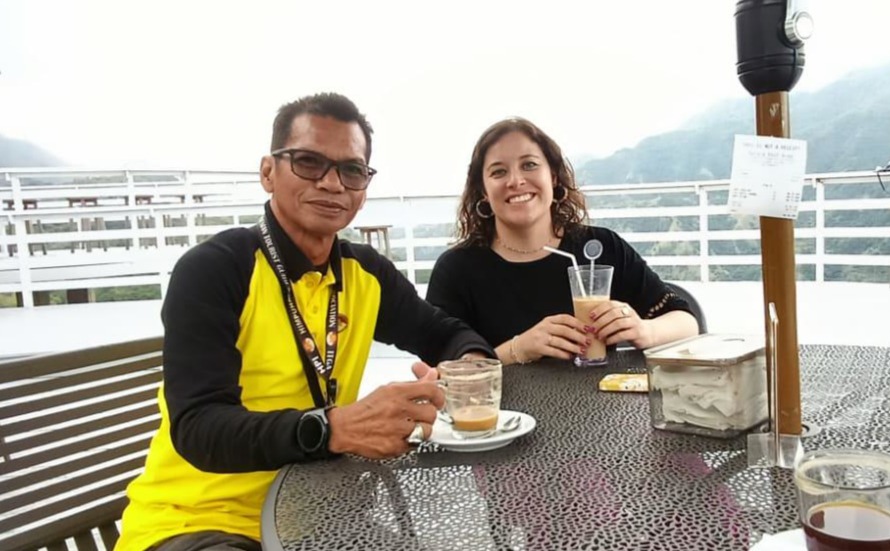
In order to get to this region called Tana Toraja, I flew to the Indonesian island of Sulawesi, a place very few tourists venture to, yet one whose faces made a lasting impression. From the capital city of Makassar, I hired a guide and together, it took close to 12 hours (with stops) along winding and rural mountain roads. Along the way, we stopped at an elementary school where I was treated like royalty and sipped coffee with a view of the highland landscape. After a full day in the car, we arrived in the “Land of the Dead.”
The Torajan people who call this place home are known throughout Indonesia for one thing about all others: the way they honor their dead. For them, death is not an ending to be mourned quietly. It is a reflection of the generosity in their life and a journey which demands an elaborate farewell.
My Camera and a “Slop” of Cigarettes for the Family
The morning of the funeral, Salim picked me up at my hotel and we stopped at a small convenience store to buy a carton of cigarettes (“a slop,” as he called it). This would be gifted to the family as a thank you for welcoming us.
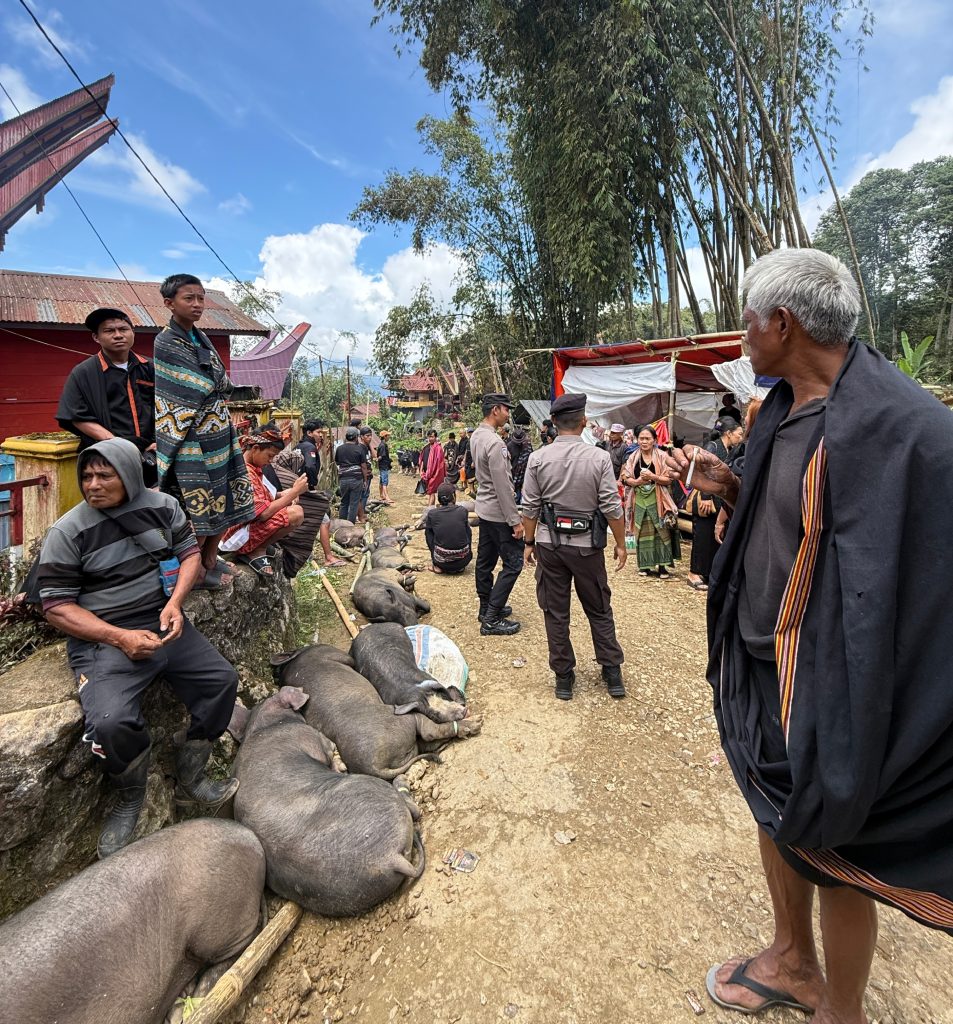
With the help of locals turned parking attendants, we parked a distance away. Walking up the dirt path, I saw people milling about, selling small trinkets and drinks, police officers standing around with cigarette smoke in the air. The sound of a pig screaming I had heard in the distance was now right in front of me, desperately loud. Other pigs lay quietly on the ground, some with their hooves tied together; they would soon be slaughtered.
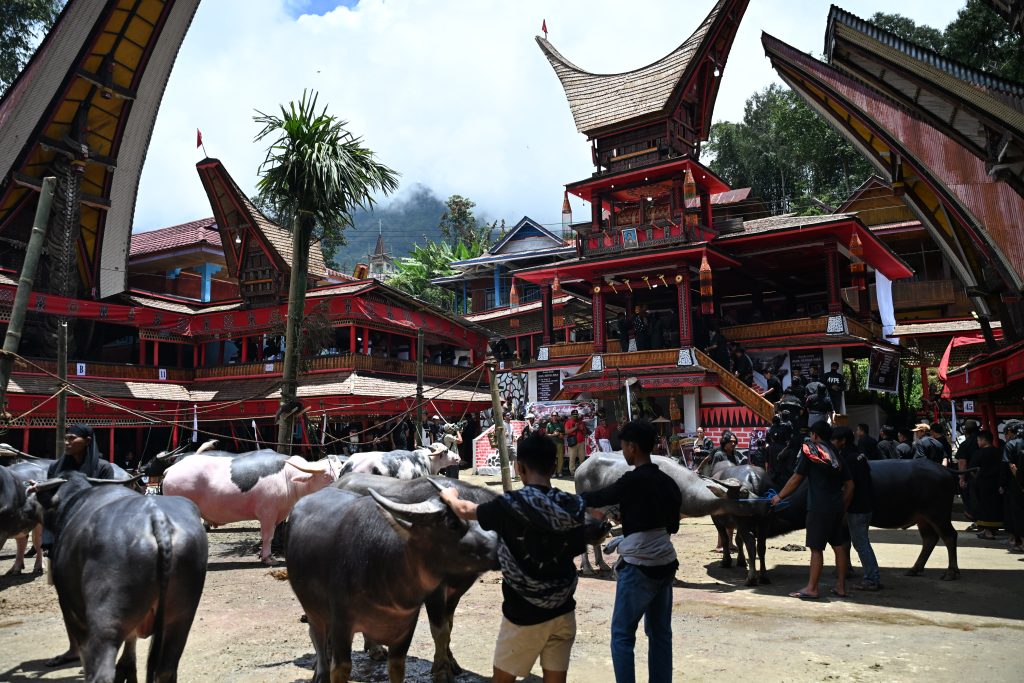
I followed Salim down to the ceremony area and stood aside when a parade of buffalo was guided in. In front of me was an open space surrounded by tongkonan (the traditional ancestral houses of the Torajan people). Up close, the detail of these dramatic boat-shaped roofs was extraordinary and fascinatingly, they had been built specifically for this funeral. In front of me, families sat crowded in each tongkonan house, while young men held buffalo steady in the middle of the circular space.
A Two-Year Wait
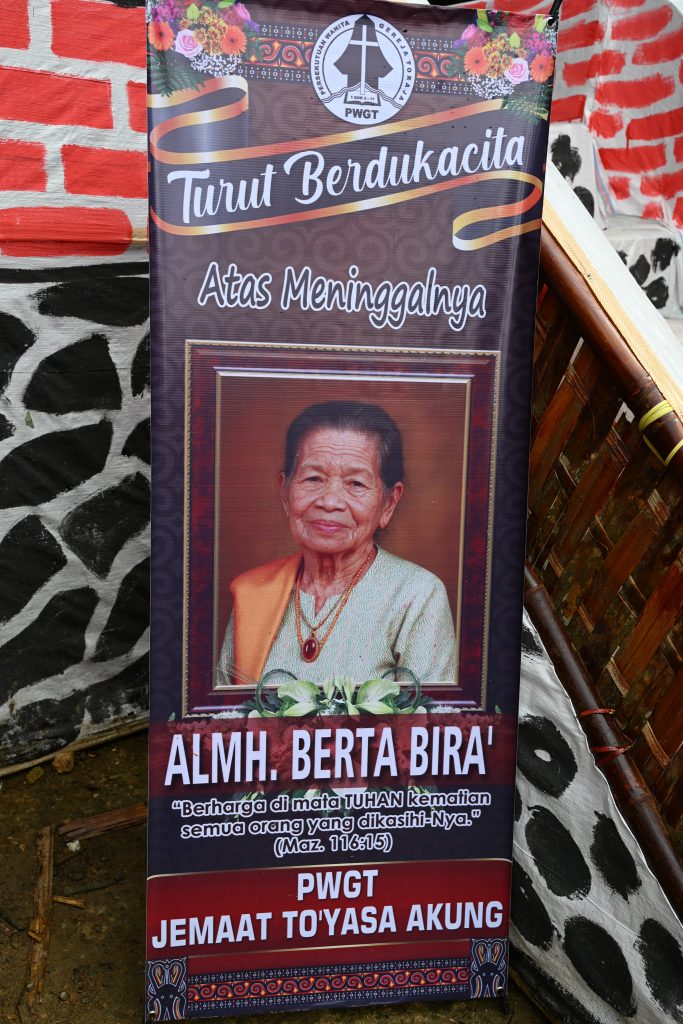
The woman being honored, Berta Bira, was 95 years old and a noblewoman. She had died two years prior but in Tana Toraja, death and a funeral are two completely separate entities.
The transition to death only happens after the family has a funeral ceremony, which in Toraja is called a Rambu Solo. The size and scale of one’s Rambu Solo is generally representative of the length of and generosity in their life. For 95-year-old Berta, her funeral would last between 6 to 7 days. I was visiting on the third day of her Rambu Solo, marked by welcoming guests and extended family from afar.
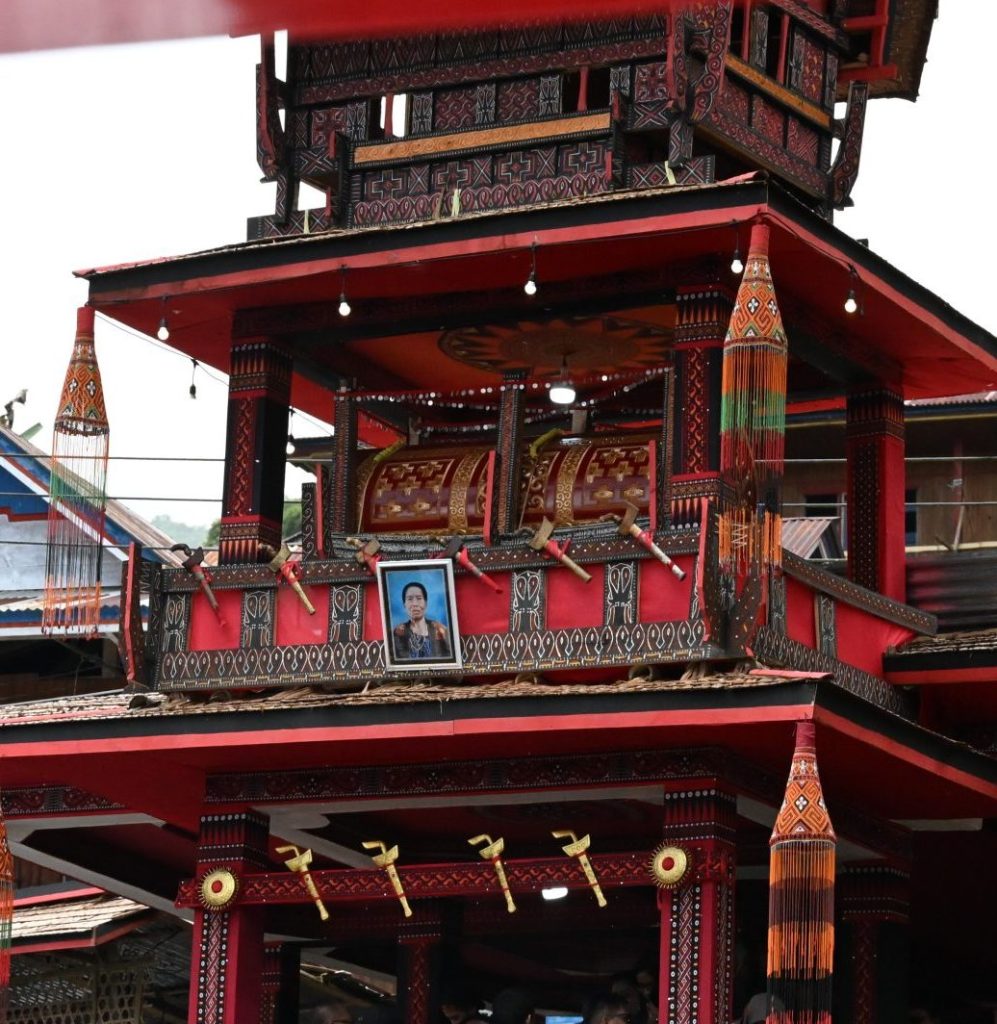
I looked up and saw Berta’s coffin resting on top of the main tongkonan, watching over everything. As the “Master of Ceremonies” (MC) spoke consistently over the loudspeaker in a language I could not understand, I realized that the long journey to this far off, remote place had been worthwhile.
The Economics of Grief (Buffalo, Status, and Cost)
Watching Berta’s Rambu Solo wide-eyed, Salim explained everything to me. This was not a gathering pulled together at the last minute; Torajans plan for months or even years in order to hold a funeral large enough for their loved one. And it all had to do with the buffalo.
In Torajan culture, the number of buffaloes slaughtered are directly tied to the wealth and status of the family. For a noblewoman like Berta, the minimum amount was considered to be 24. It’s a simple equation; more buffaloes equals more means. Salim recounted a funeral where 350 buffalo were sacrificed, a display of wealth so massive it was still being talked about years later.
70 Buffaloes and a Lifetime of Saving
High status comes a hefty price tag and, honestly, the math is hard to believe. A funeral like this can easily cost $200,000 USD in a region where the average yearly salary is closer to $2,000. Most Torajans spend their entire lives saving for their own death.
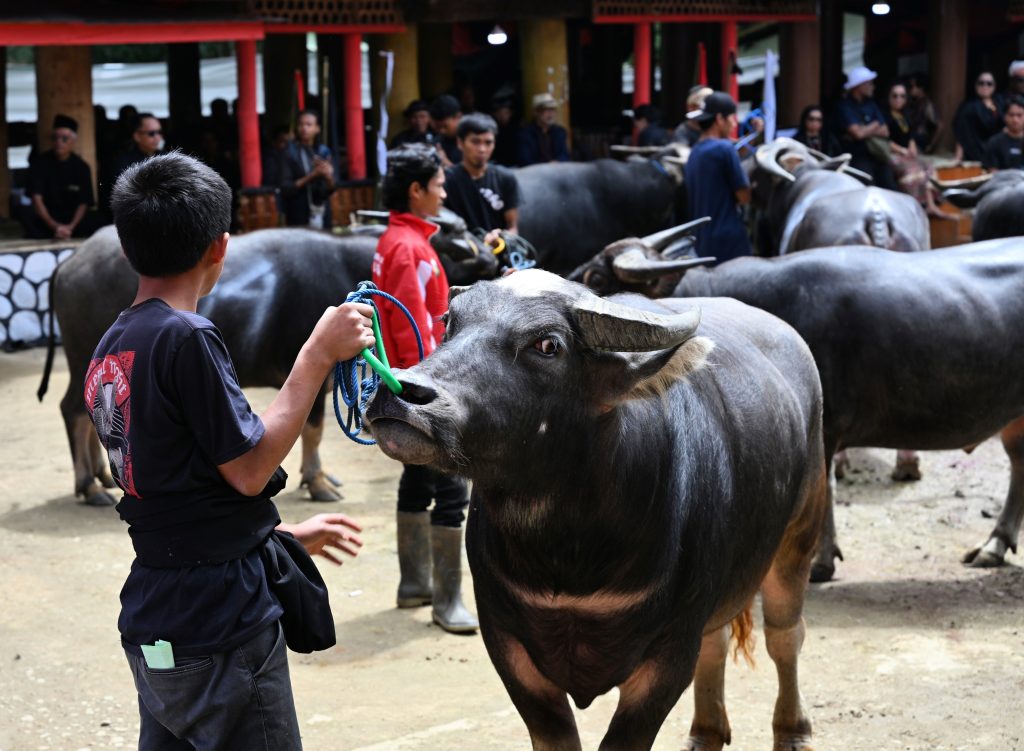
It’s not all up to the now-deceased and their loved ones, though. Buffaloes are also gifted by friends and extended family. But even then, the gift is moreso a debt that is diligently recorded. If a neighbor gives Berta’s family a buffalo today, they are then expected to give one of equal value later, in return. If Berta’s children cannot balance the debt, the grandchildren will become responsible for paying it back. To me, it sounded more like a multi-generational IOU rather than a thoughtful gift to the grieving family.
However, possibly more importantly than the status factor, Torajans believe that buffaloes carry the spirit of the deceased to Puya (heaven). Torajans believe that in the moment the buffaloes’ spirits are released after slaughter, they will escort the dead on their final journey. Every family, no matter how poor, must sacrifice at least one buffalo. Salim learned that at this funeral, which hosted 500 guests, 70 buffaloes would be sacrificed to carry Berta on her way.
VIP Seats in a Temporary Village Built for the Funeral
The circle of tongkonan houses surrounding us hadn’t been there a few months ago. Salim explained that these structures were built for this occasion alone. Once the funeral was over, the structures would be dismantled. “They belong to the dead,” he said. “You don’t reuse what belongs to the dead.”
And yet, even in a village built just for Berta, there was room for hierarchy. These temporary houses were divided into sections, including two designated VIP houses. I pointed to them and laughed to Salim as, to me, this felt both unexpected and silly. I wondered who did you have to be to get such an exclusive seat?
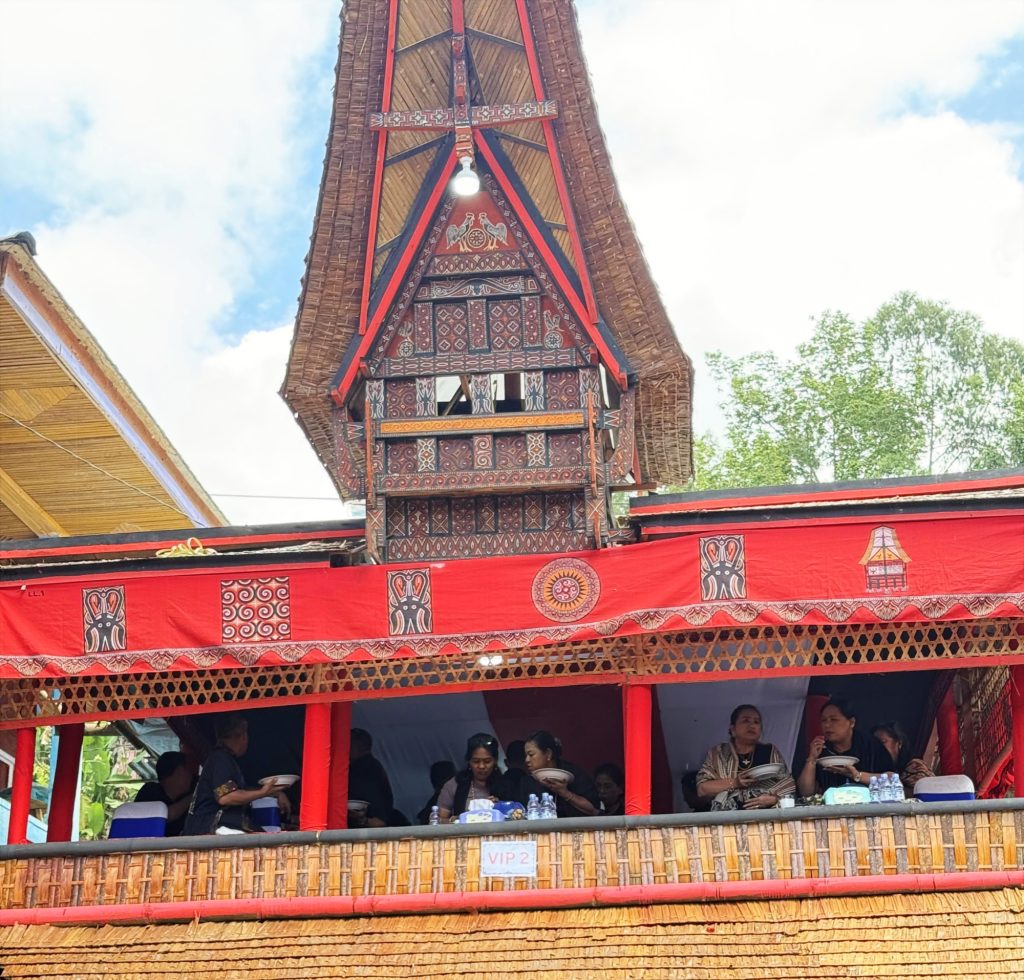
Front Row at the Rambu Solo
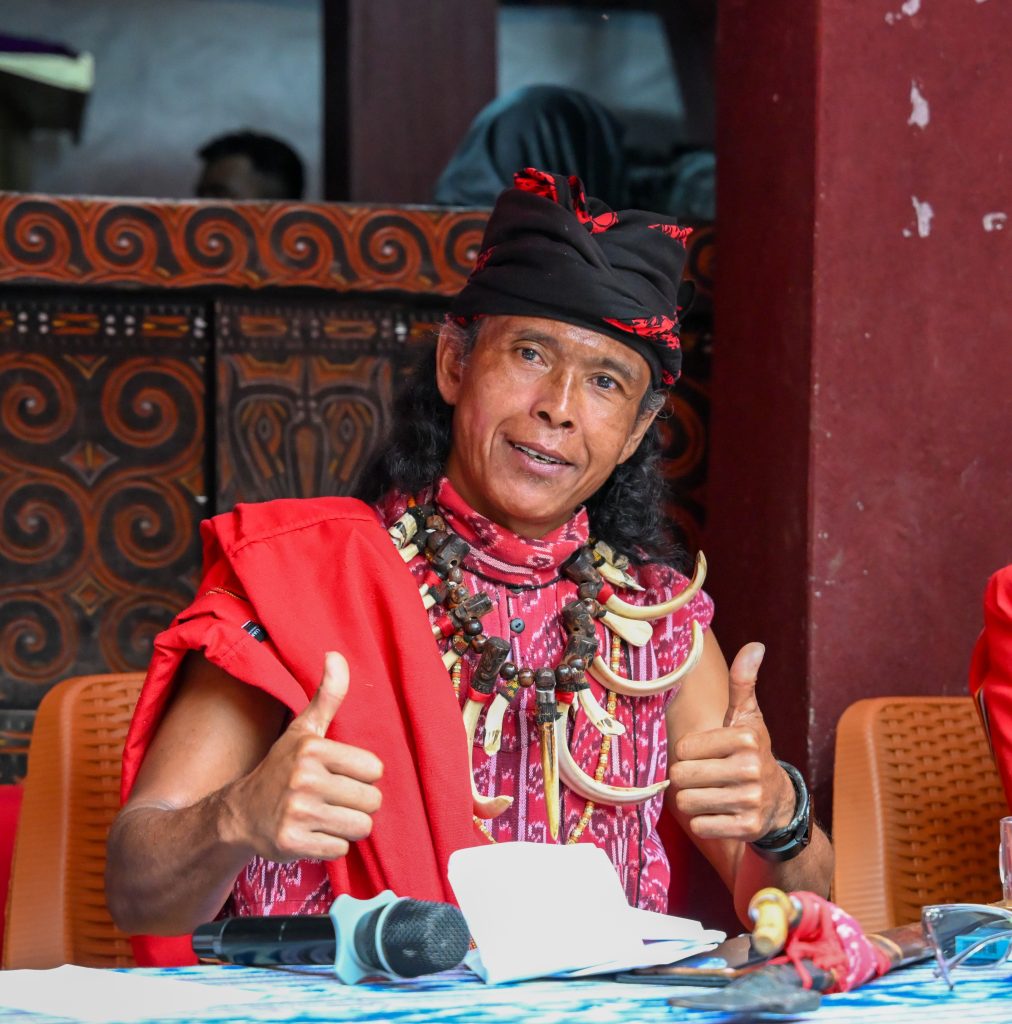
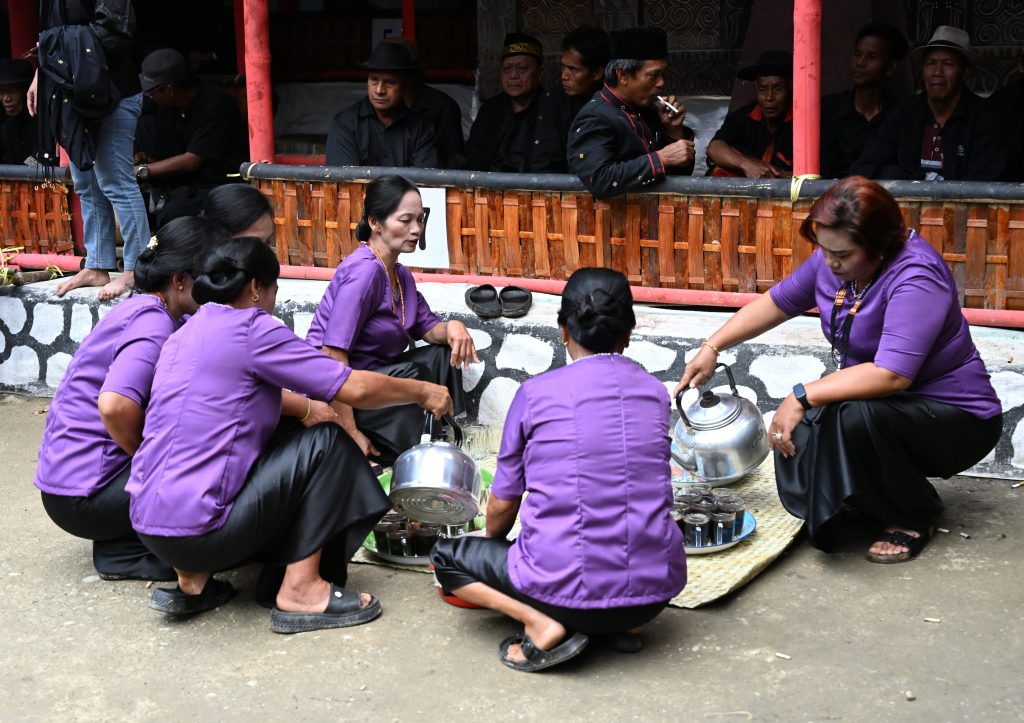
Although I was not in the VIP section, it felt good to be right in the action. In front of me, a young man stood, holding a buffalo still. At one point it bucked and we had to quickly retreat so we weren’t stepped on. The scene felt chaotic, yet the ceremony had structure to it. Women wearing purple tops passed out coffee to the guests, while the buffalo remained tied in the center, seemingly bored, entirely unaware of their nearing fate.
Ceremonial Beads and Smartphone Screens
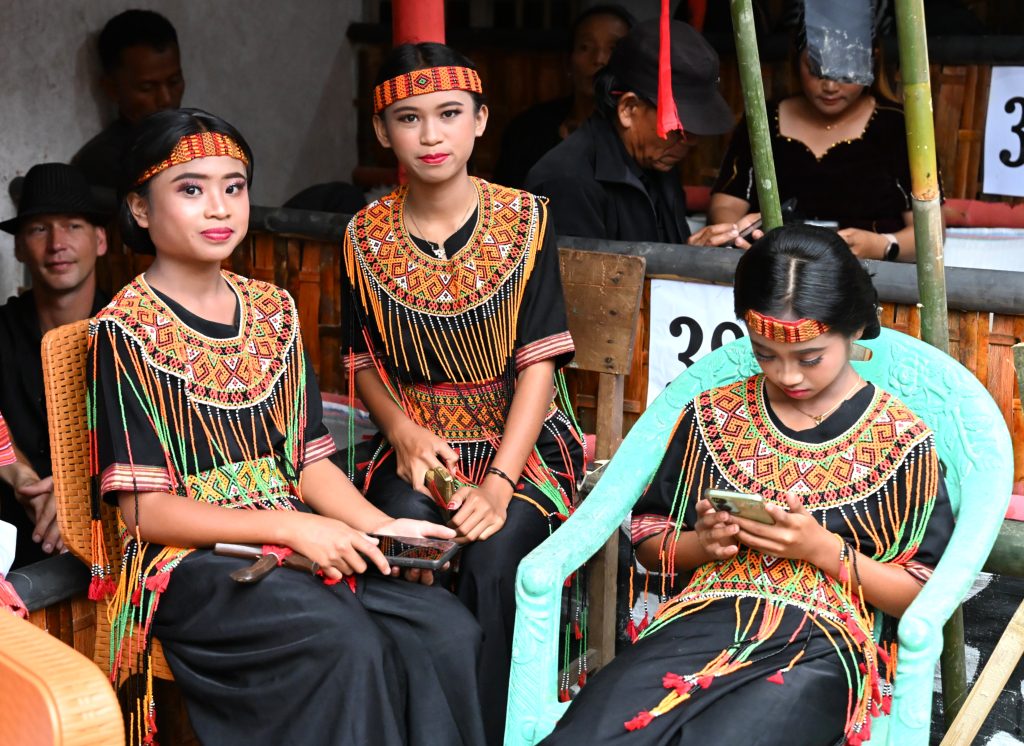
Among the guests were children dressed in full ceremonial garments; the girls with their faces made up, wore intricate tasseled collars of red and orange beads over long black dresses, with headbands that perfectly matched.
Although their outfits held the weight of tradition, they were just kids. They huddled together on plastic chairs, some looking bored, while others scrolled on their phones. It was a fascinating dichotomy.
Salim explained that the future of the Rambu Solo is complicated. Many young Torajans are torn between honoring the customs of their ancestors, while also wanting to save money for the expenses of modern life. There is an inherent conflict here, one that surely won’t be easy to resolve.
A Scream, A Laugh, and a Mouthful of Betel Nut
At two separate points throughout the afternoon, the ceremony shifted gears. Four men moved through the circular space, striking the gongs as they walked, led by a figure that was impossible to miss.
He was the only person I saw all day who walked the ceremony space barefoot, his feet covered in the same dirt that the buffalo stood on. Dressed in a ceremonial shirt and draped in a vivid red cloth, he held a wireless mic; this was another example of the duality of tradition vs. today.
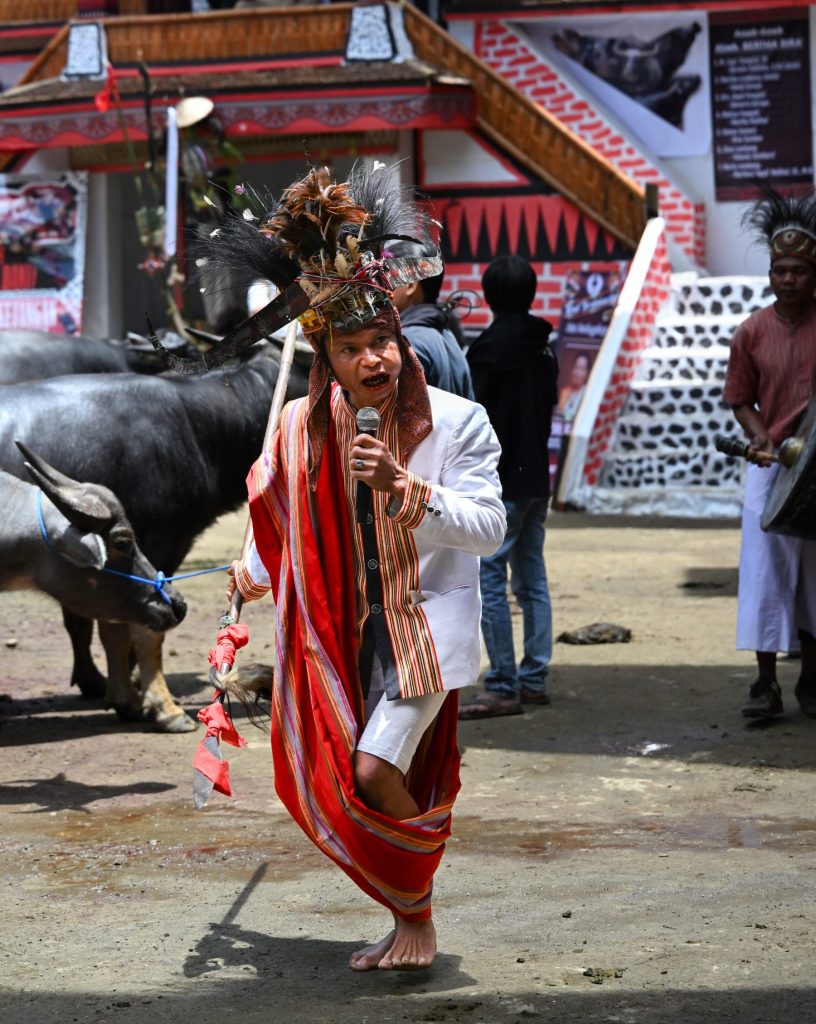
The sounds coming through the microphone were unlike anything I’d ever heard. It wasn’t a song or a chant or a prayer. Instead, the man with the microphone gave a loud scream followed by sharp, high pitched bursts that sounded almost like a psychotic laugh.
He hopped around with a rhythmic precision, gripping a tombok, a ceremonial spear. He kicked each heel up one at a time while bouncing lightly on his bare feet. His cheeks were puffed out and I saw him spit onto the ground. I asked Salim if the man was using chewing tobacco, but said it was likely betel nut. Apparently betel nut, a stimulant similar to nicotine is super popular in Toraja.
The Pain Behind the Pageantry (When Ritual Becomes Grief)
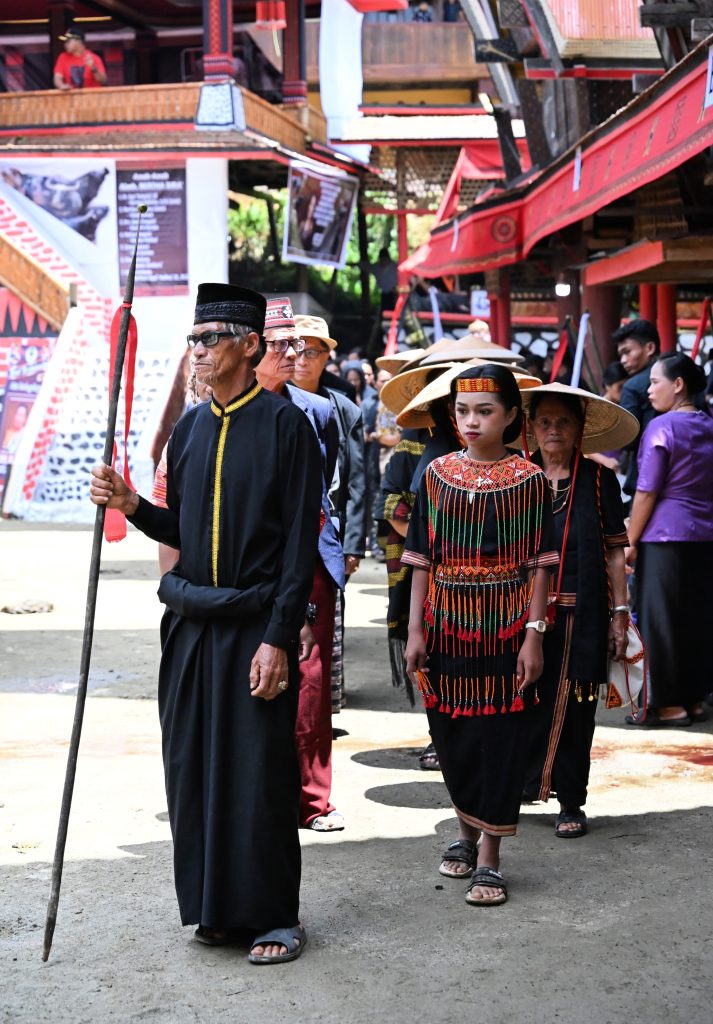
Then, the procession began. An elderly man in a long black robe and wearing a peci (the black velvet cap that is Indonesia’s national headwear for men), with a young girl in her traditional dress, both walked with quiet authority.
Behind them, the line of family members walked slowly, marching towards Berta’s coffin.
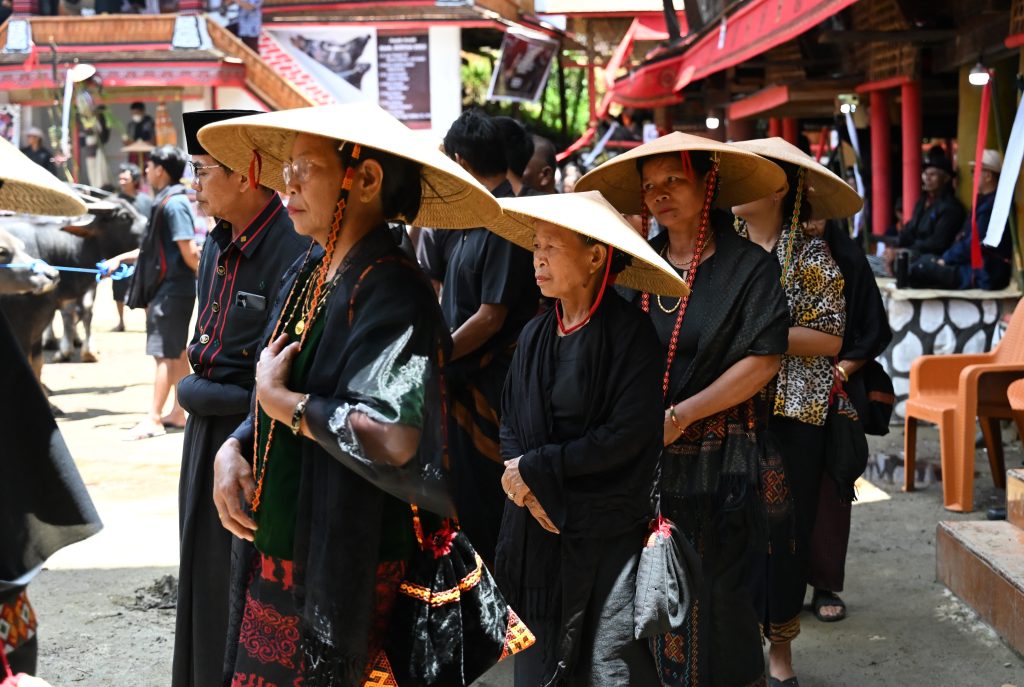
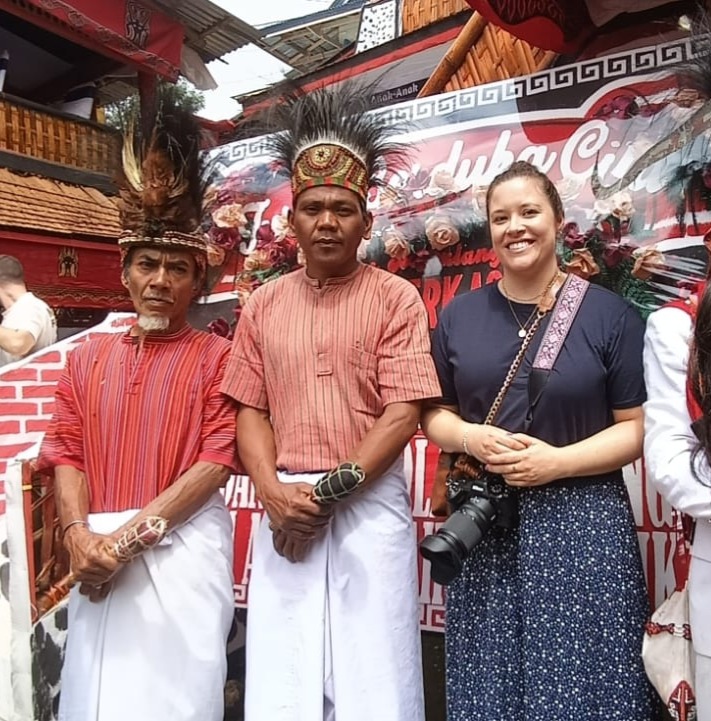
The honored extended family in this group had traveled from across Sulawesi, while others had flown in from other Indonesian islands like Papua. As they walked right past me, I noticed the women wearing wide, conical woven hats. I had always associated this design exclusively with Vietnam, but Salim informed me that the style spans much of Asia. In Indonesia, they are called caping, and the women donned them as part of their formal funeral attire.
Even as the MC continued his loud, rhythmic talking over the microphone, there was a notable energy shift. Up until then, the day had felt like a spectacle or even, a performance. But as the family began their silent procession, that was all stripped away.
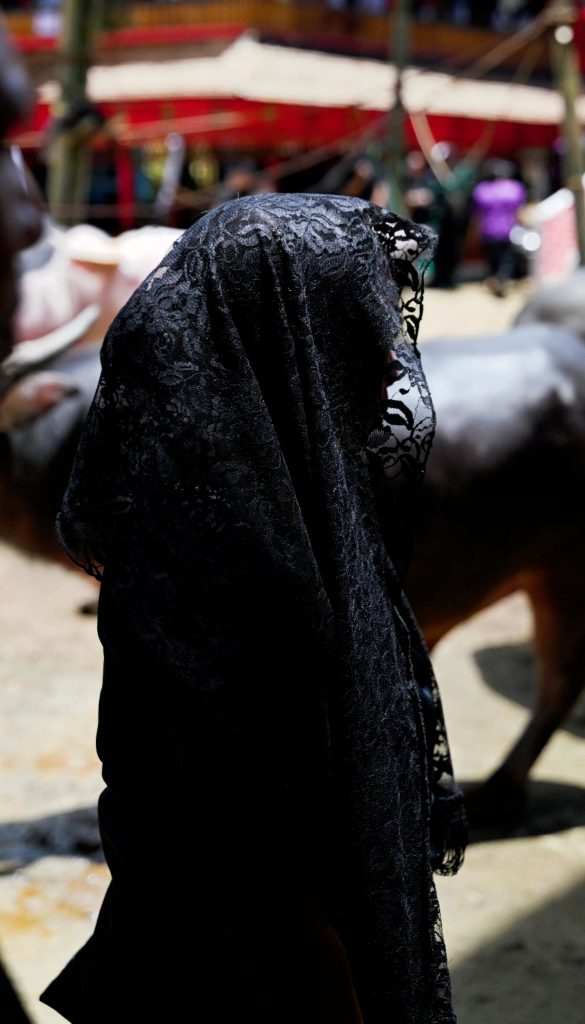
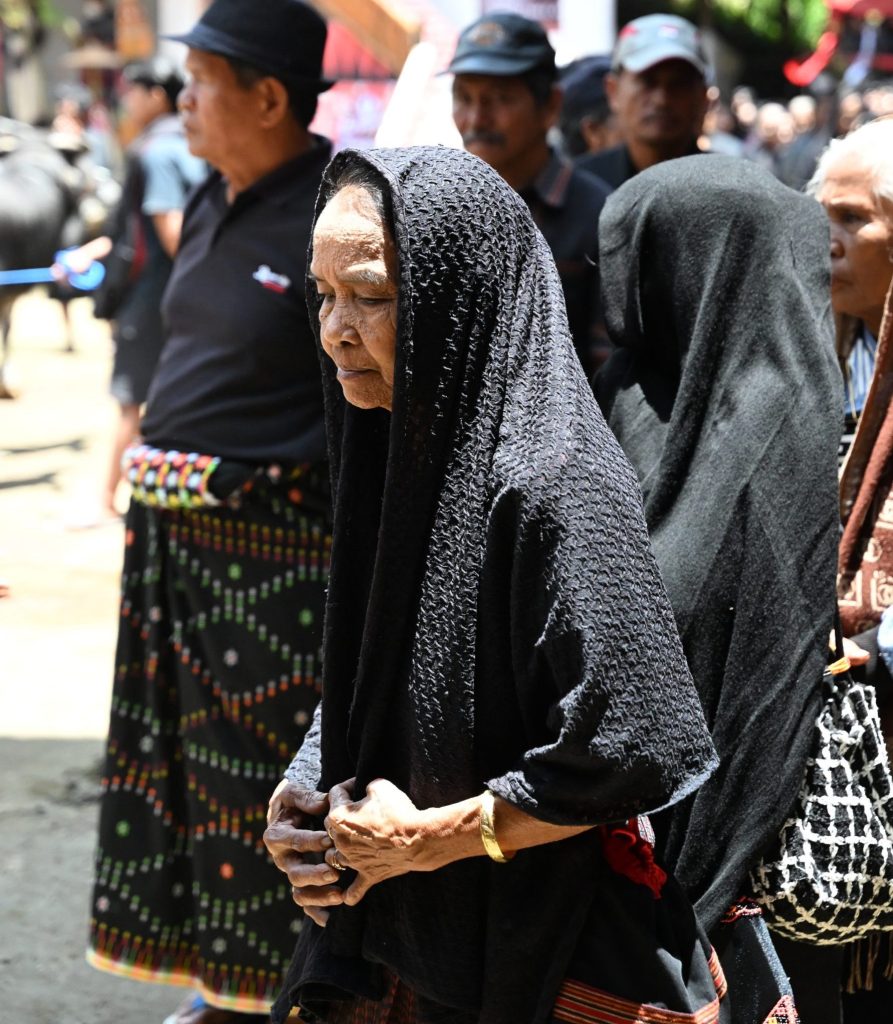
Up close, the pageantry faded completely. It was the only point where things felt solemn and I witnessed true, heavy grief. We stayed for a long time, watching, listening, and photographing.
The Heart of Torajan Hospitality
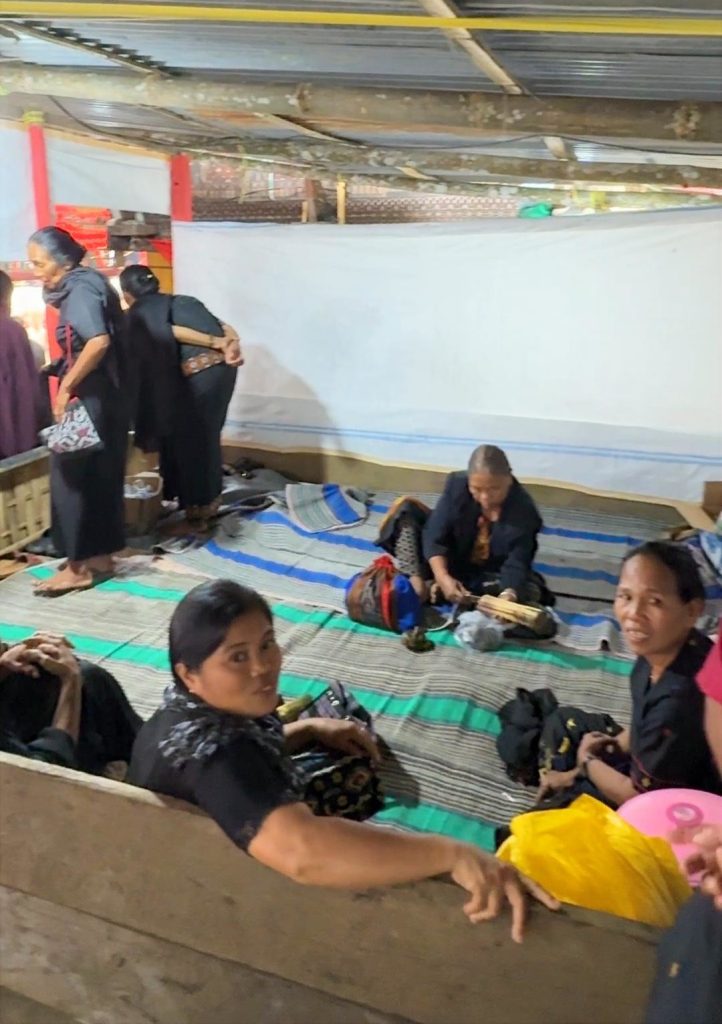
At one point, Salim gestured for me to follow him. We removed our shoes at the base of a bamboo ladder and climbed into the shaded interior of a tongkonan. Striped woven mats had been laid out over the bamboo floor. We sat criss-cross, side-by-side with family members and a handful of other Westerners. The shade and quiet in this space provided a nice break from the heat and noise outside.
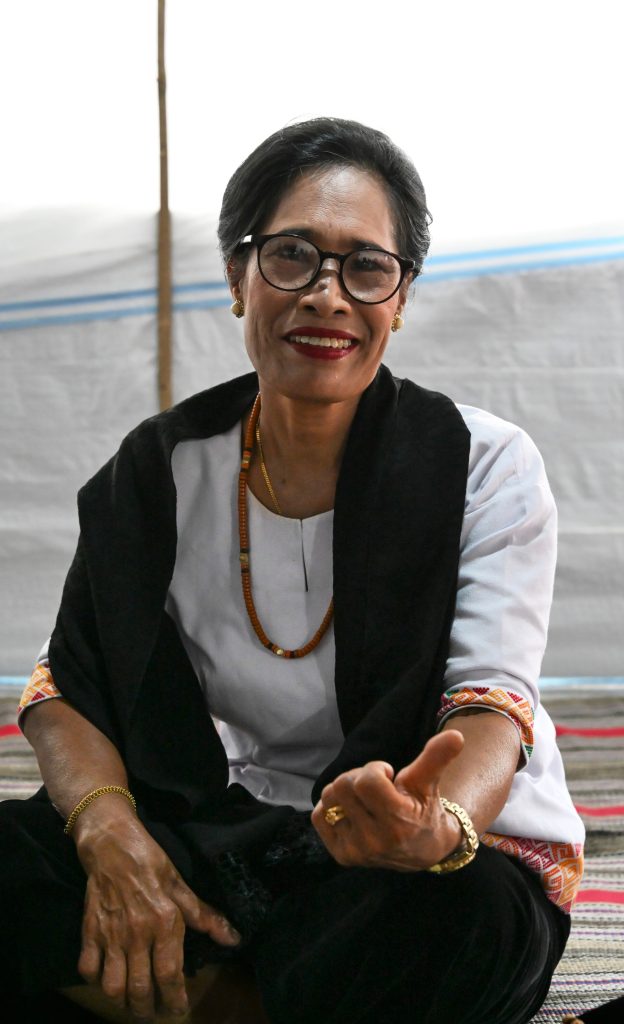
Salim introduced me to one of Berta’s six children. He translated the daughter’s explanation that there would be no crying today. Instead, the family’s focus was on welcoming guests. Today was more like a family reunion, she said, and it was not yet the time to grieve. They would only allow themselves to truly cry on the final day of the Rambu Solo, when Berta would be taken to her grave.
Coffee, Cake, and Friendly Faces
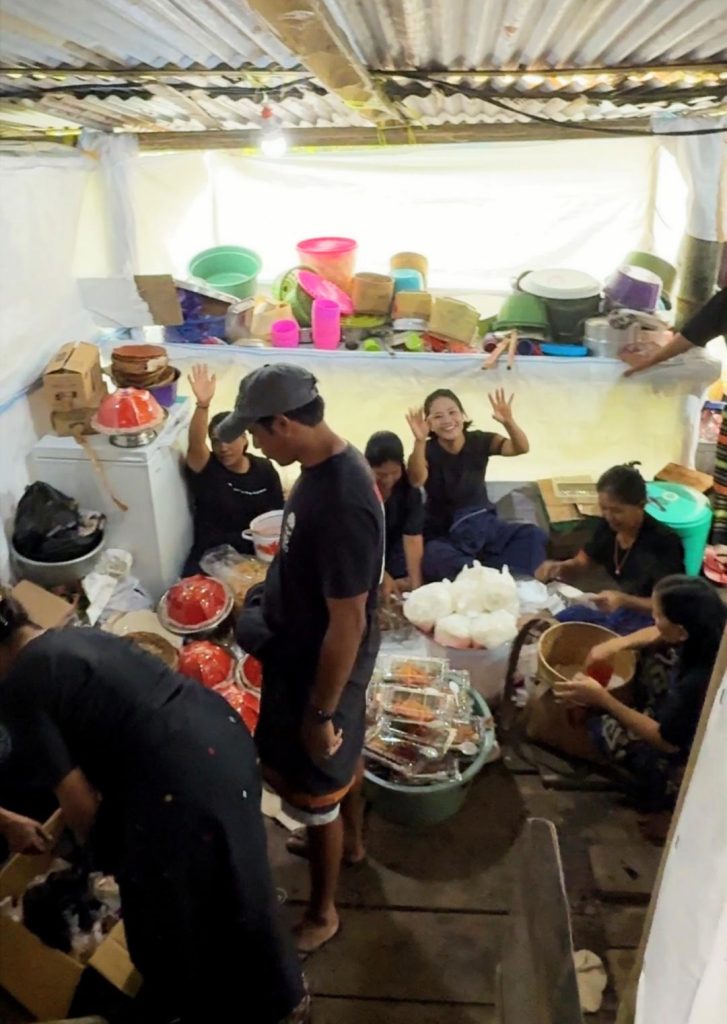
As we talked, coffee and snacks were placed in front of us. There were tasty slices of yellow sponge cake, called kue bolu (I may have had a few) and a pile of bitter crackers that I mainly left uneaten. Behind us sat a makeshift kitchen, crowded with people preparing food for hundreds of guests. I peeked in and the family smiled and waved, again demonstrating their hospitable nature.
It is a bizarre feeling to be at a stranger’s funeral, yet I never once felt unwelcome. I kept remembering what Salim had told me: having a foreigner there wasn’t an intrusion. In fact, it was considered an honor.
Before leaving, I handed over the slop of cigarettes we had brought earlier in the morning. This gift felt insufficient against the backdrop of such an immense occasion, though it was warmly accepted by Berta’s daughter.
Rambu Solo Explained: The Sacred Rituals of a Tana Toraja Funeral0p
One full day of the Rambu Solo is dedicated to sacrificing the buffaloes. When it is time, their throats are slit and their meat is distributed amongst the guests, the best parts going straight to Berta’s closest family. One family may take home up to 11 lbs (5 kilos) of meat after the Rambu Solo.
Warning: The following image shows the graphic reality of the sacrifice (buffalo horns). Click to expand.
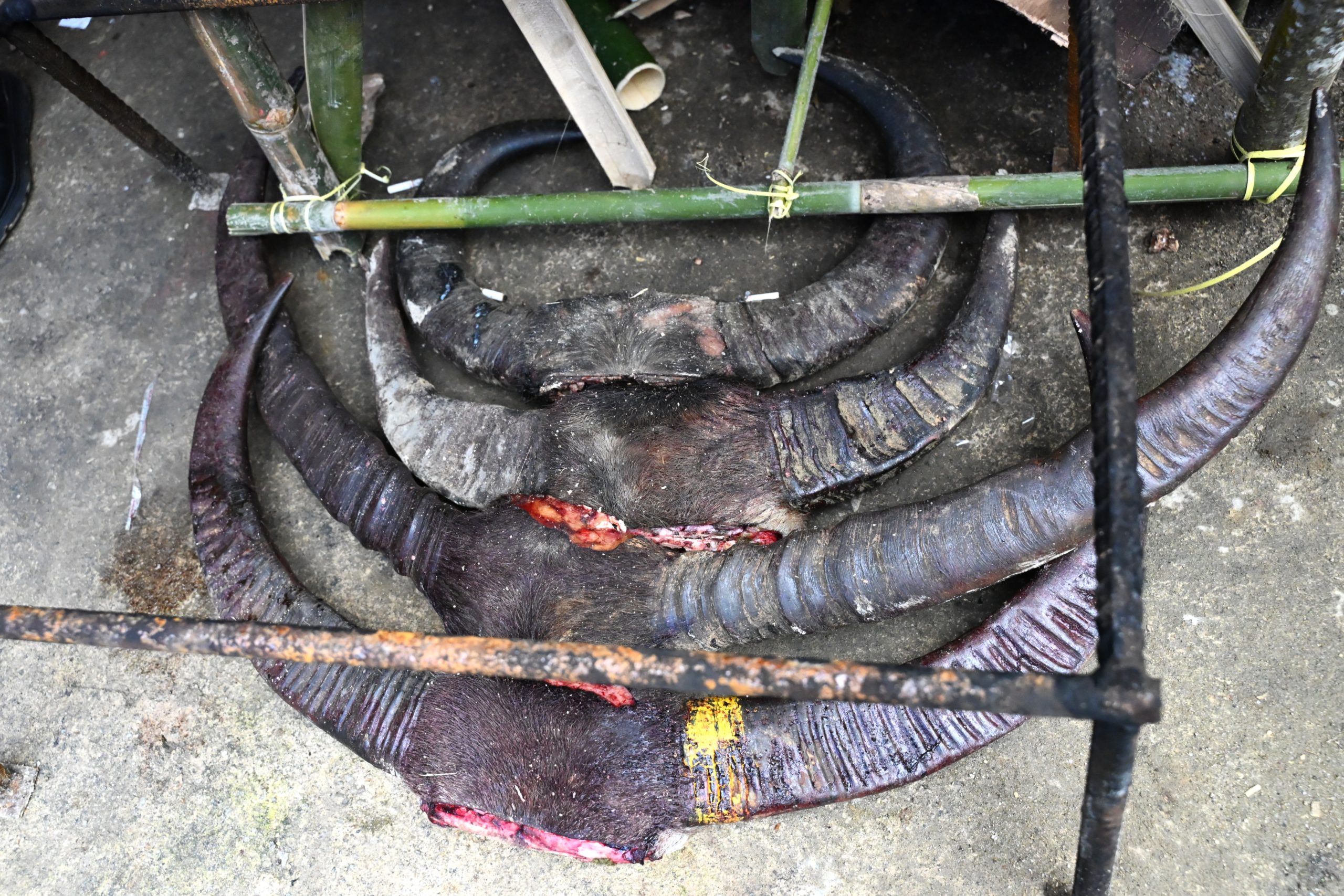
On the other hand, they don’t have a specific day for the pig sacrifice; it’s less of a ritual. The pork meat is practical and is also distributed to the guests as a parting gift.
Raw Truths vs. the Grocery Store Shield
Salim explained something that has stayed with me. When the killing begins, the buffaloes don’t react; they remain obvlivious, unbothered and unaware. In contrast, pigs are intelligent enough to understand what is happening. When the butchering begins, they panic, squealing and fighting until there is no more use. This made it all the more devastating to me.
Now, as we left the ceremony, Salim pointed out the pigs being slaughtered on the side of the road. My eyes glanced to the left and after seeing a a mix of knives and blood, I quickly looked away. I stared straight ahead, not looking over again.
Yet, I couldn’t help but feel like a hypocrite. Back home, I buy perfectly wrapped, bloodless packs of meat from the grocery store shelf. I am shielded from the reality of what happens in those meat processing factories. At least here, the process wasn’t hidden. It was raw and visible. And more importantly, every part of the animal would be consumed, and every death would serve a purpose.
And Life Goes On
Walking down that dirt path, towards the car, both the crowds and noise faded. I was still looking ahead when Salim called my name, bringing attention to the gorgeous landscape just to my left. The scenery was completely vast and shockingly peaceful. That serenity, just minutes after leaving such a high-octane environment, felt jarring. I asked myself how could this calm be just a few minutes walk down the road?
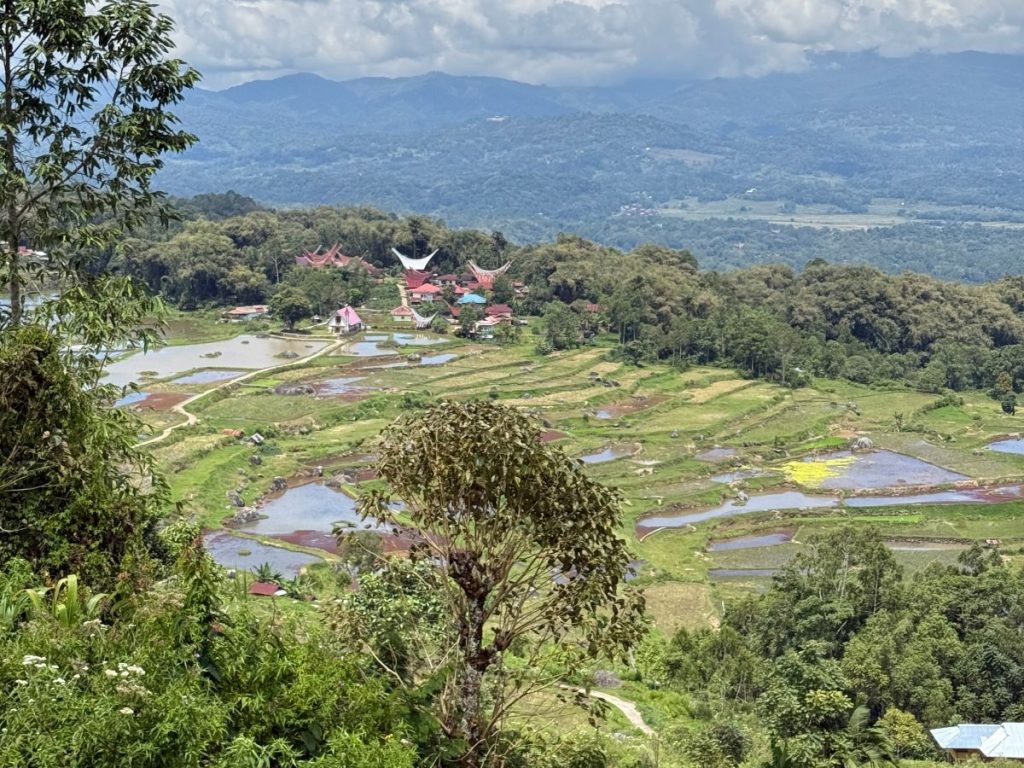
We drove a few minutes to a small restaurant with a panoramic overlook. If Salim had asked, I would’ve told him I was ready to go back to the hotel; the day had been emotionally exhausting. But it was on the schedule, so off we went.
At the quiet, empty restaurant, I sat feeling stunned. Just a moment ago, I was watching the bloody practice of animal sacrifice. Now, I was sitting at a plastic lunch table, looking out over sprawling rice terraces. I ate my basket of fries and tried to read a few pages of my book, but couldn’t properly focus. The shift from a vibrant, multi-day performance to a solitary lunch felt like total emotional whiplash.
Reflections on Tana Toraja: Looking at Death Straight On
After returning to the States, I was hesitant to tell people about my experiences in Sulawesi. I happily shared stories about Cambodia and Bali, but I assumed people would side-eye me if I described Tana Toraja. I figured they’d wonder why the hell anyone would travel halfway around the world for a culture defined by death. Even the Balinese hotel clerk looked shocked when I told her my next stop was Sulawesi, admitting she’d never known anyone who’d actually gone there.
And honestly, it’s something I’m still parsing through, but as I started this blog, I found myself most excited to write about Tana Toraja. It was so unique and impactful. This day left a true lasting impression on me.
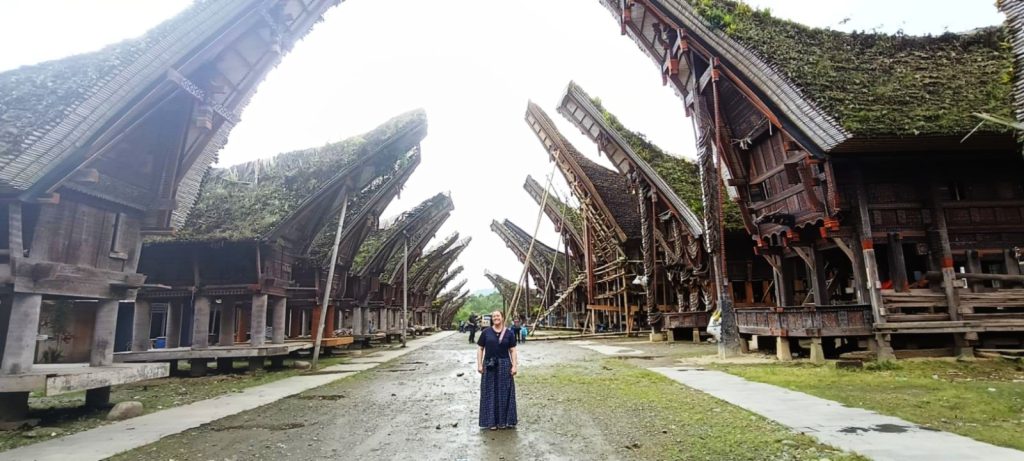
Even now, months later, I remember this day with utter amazement. I’ve been lucky enough to witness many things in my travels, but this stands alone. There is no guidebook that prepares you for the sheer scale of a tradition that asks a family to save for decades just to say a “proper” goodbye. There is no research that will prepare you to be amongst the buffaloes, with the laugh-yelling sounds all around you.
Most Westerners spend their lives trying to look away from death. In Toraja, they look right at it, dress it up, and throw it a massive freaking party. A Rambu Solo is a grand, loud, multi-day production. This was all for Berta, a woman already dead two years.
Visiting a Rambu Solo Ceremony: What Visitors Should Know
Getting there
Tana Toraja is in the highlands of South Sulawesi, Indonesia. I flew into Makassar (direct from Bali) and continued by road, which can take 8–12 hours depending on stops and conditions.
Local guide
There is no way I could have had a similar experience without a local guide. I strongly recommend a professional guide or tour for access, context, and cultural interpretation. Many ceremonies take place in rural villages without signage or tourist infrastructure.
The company who planned my itinerary (with my input), managed my logistics, and guided me throughout Tana Toraja was Wandernesia.
Access to ceremonies
Rambu Solo funerals are private family events that can last several days. Access is not formalized—visitors typically attend through a local guide and are guests, not spectators.
It is appropriate to bring a small gift as a thank you for the family. My guide helped me arrange picking up the gift the morning of the ceremony.
What to wear
Dress modestly and practically. I was asked to wear dark clothes for the actual Rambu Solo ceremony. Expect heat, dust, and long periods outdoors. Closed-toe shoes are useful for uneven terrain.
Photography
Photography was accepted, but discretion matters. Avoid obstructing processions or intruding during moments of grief or ritual intensity.
What to expect
Animal sacrifice is part of the ritual structure. This is culturally significant and central to the ceremony, not staged for visitors. There is usually a specific day for the buffalo sacrifice, which I requested not to attend.
Mindset
This is not a performance. It is a family’s long-planned farewell. Patience, restraint, and quiet observation go further than interaction.
Discover more from trishwhotravels
Subscribe to get the latest posts sent to your email.