

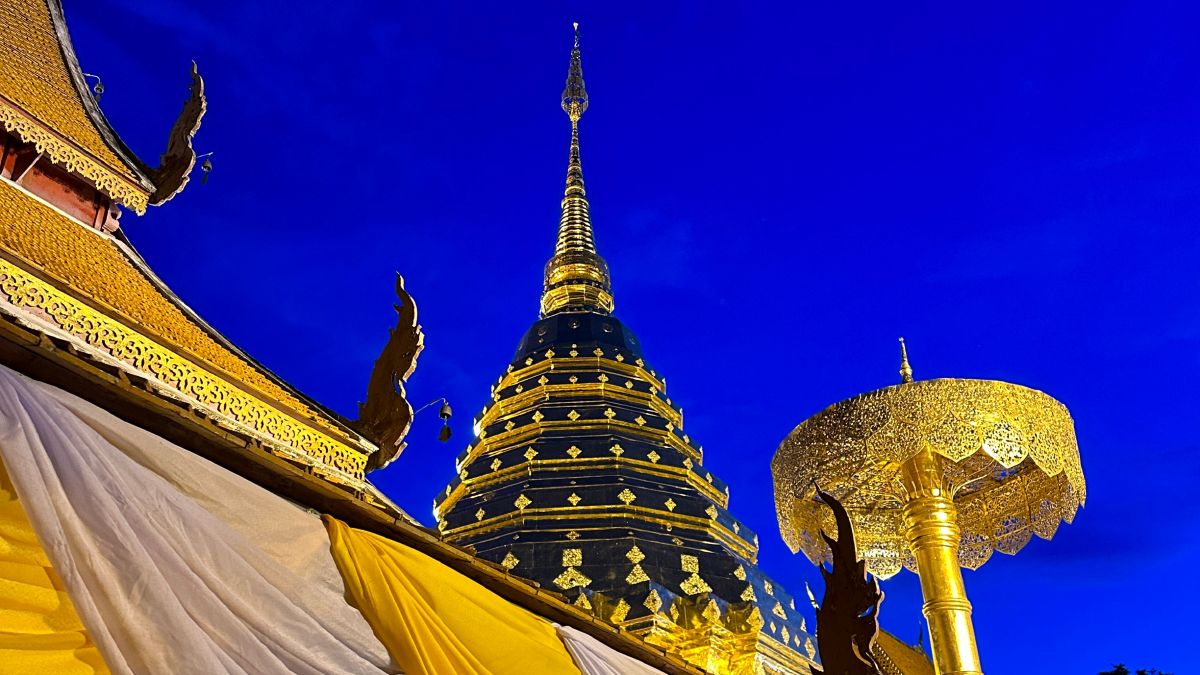
After two and a half weeks of traveling around Thailand, doing my usual go-go-go, I was glad to have a peaceful day planned. It started with another early call; I got picked up at 4:30 AM at my Chiang Mai hotel and, along with another guest from China, we drove about 45 minutes to the mountain temple, Wat Phra That Doi Suthep.
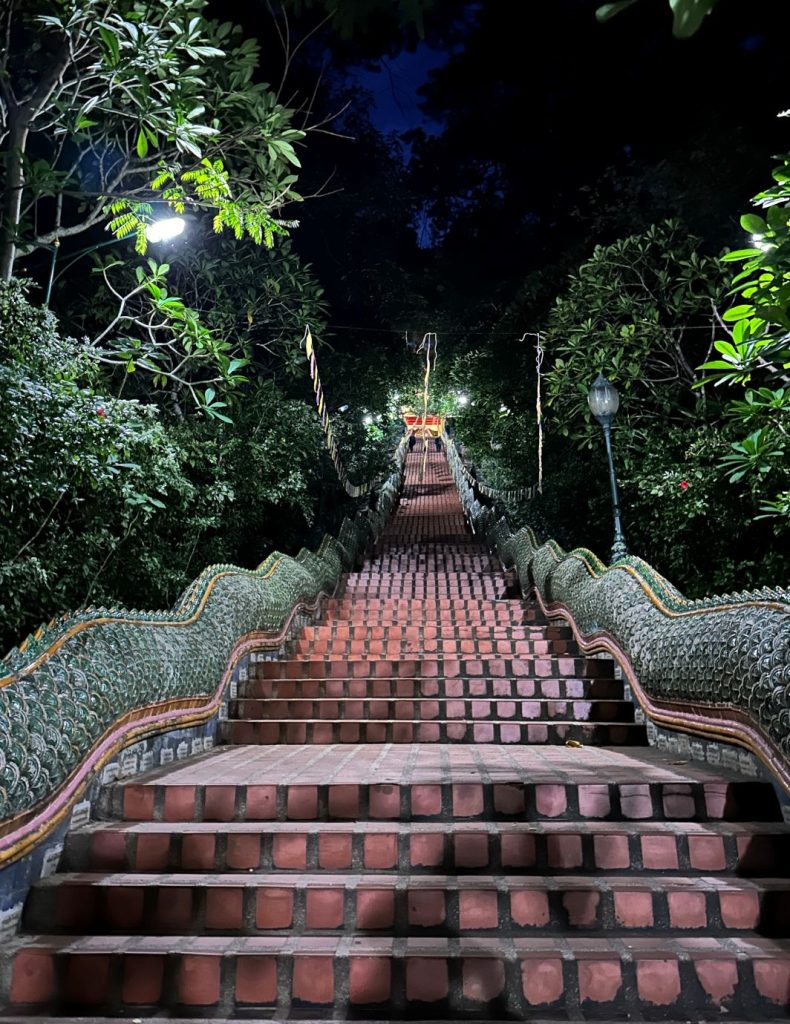
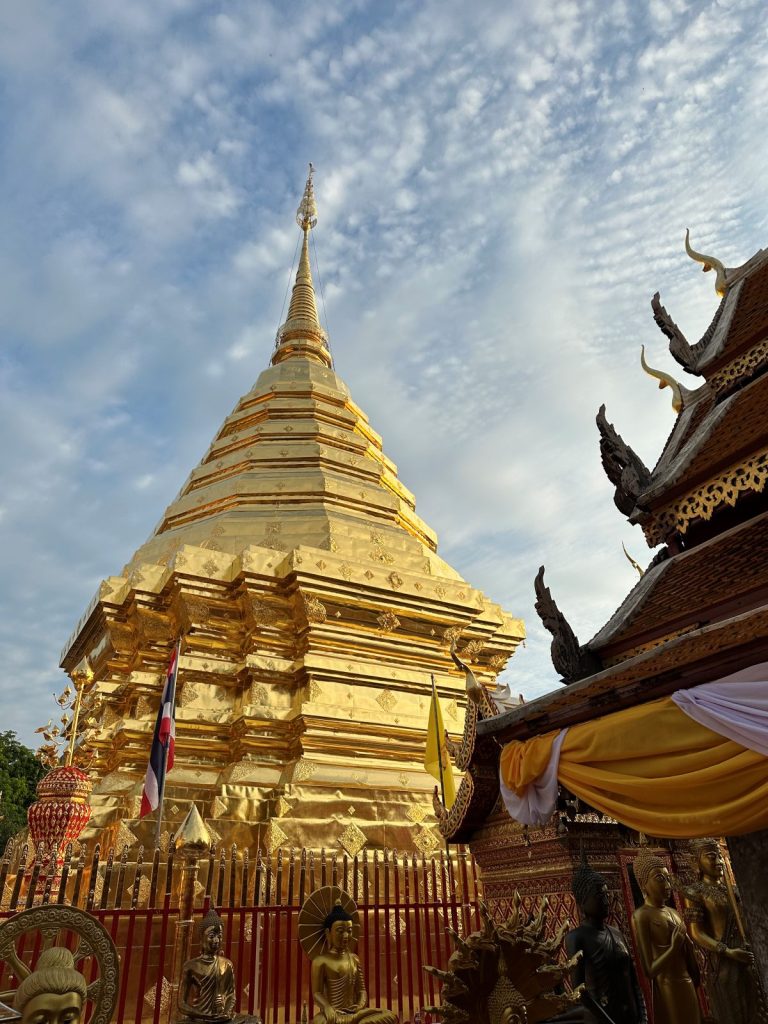
We climbed the 306 Naga (serpent) stairs up in the darkness. After making it to the top, I got my first glimpse of the golden chedi, which contrasted brilliantly against the deep, rich blue of the pre-dawn sky. Other than my small group of three, there was no one else around. Then, the silence broke. I heard monks chanting, quietly from inside an open pagoda. The monks begin each day in this way, a 600-year-old tradition which grounds them in spiritual purpose before the rest of the world wakes up.
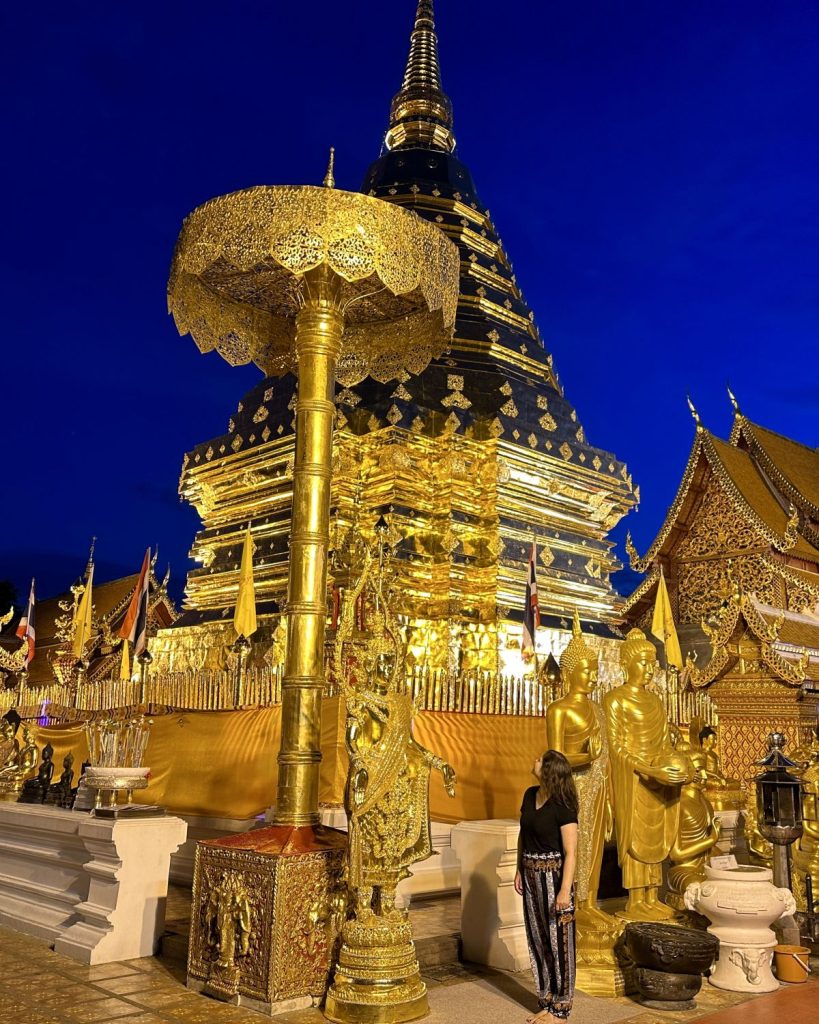
While we enjoyed the view of Chiang Mai and watched the sunrise, Sipohn, my guide, walked me through the daily routine of Thai monks (while I, ordinarily, would be lying sound asleep my bed). Their day starts at 4:00 AM with a gong; no gentle iPhone alarm for them. They do some individualized meditation or studying for the next hour, and by 5:00 AM, they come together as a group and chant their sutras (the steady, rhythmic vocalizations I heard when we first arrived).
Once the communal prayers are finished, the monks start their daily chores. They sweep the temple grounds or halls in silence and prepare their bowls to receive alms from the community: a ritual that has remained unchanged for centuries.
Tak Bat: The Morning Alms
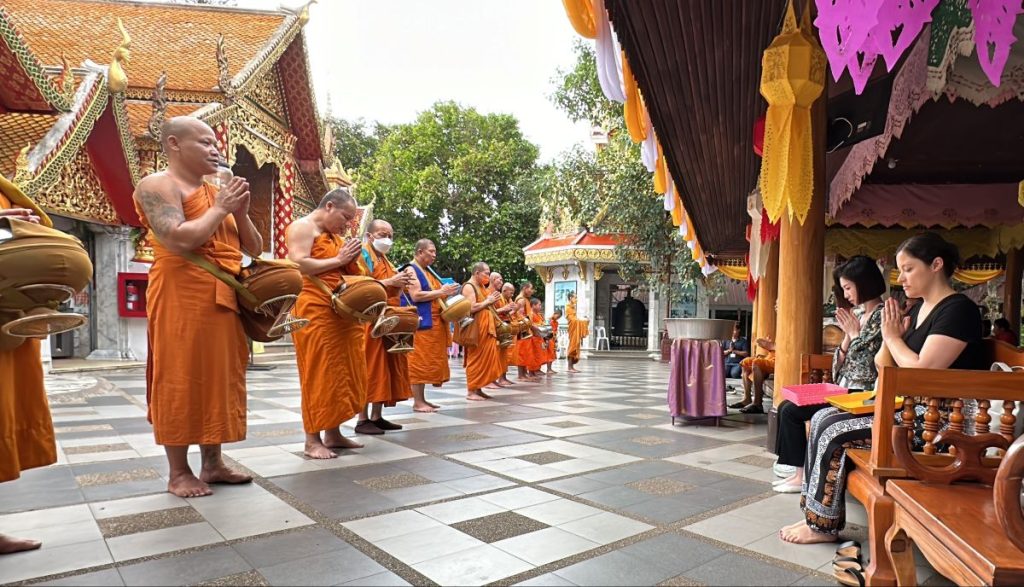
By 7:00 AM, it was time for us to participate in Tak Bat, the morning alms offering. There were local residents, devout Buddhists, and tourists like me who all gathered for this quiet act of donation.
These monks aren’t allowed to cook, garden, or even keep leftovers. They rely entirely on what people like us put in their bowls. They cannot ask for specific foods and must simply accept what is offered. It’s a humbling thing to witness. There is a deep bond between the monks and the community because they literally reply on others to provide their next meal.
Maybe this was a selfish thought, but I wondered, what do the community members get in return? Sipohn explained that people were investing in their own spirituality and asking the monks (who serve as spiritual vessels) to take their prayers and run them up the flag pole, so to speak. As a thanks for this spiritual offering, the monks chant blessings over the people who give the alms to transfer good energy back to the giver and their family.
Small Gestures, Deep Respect
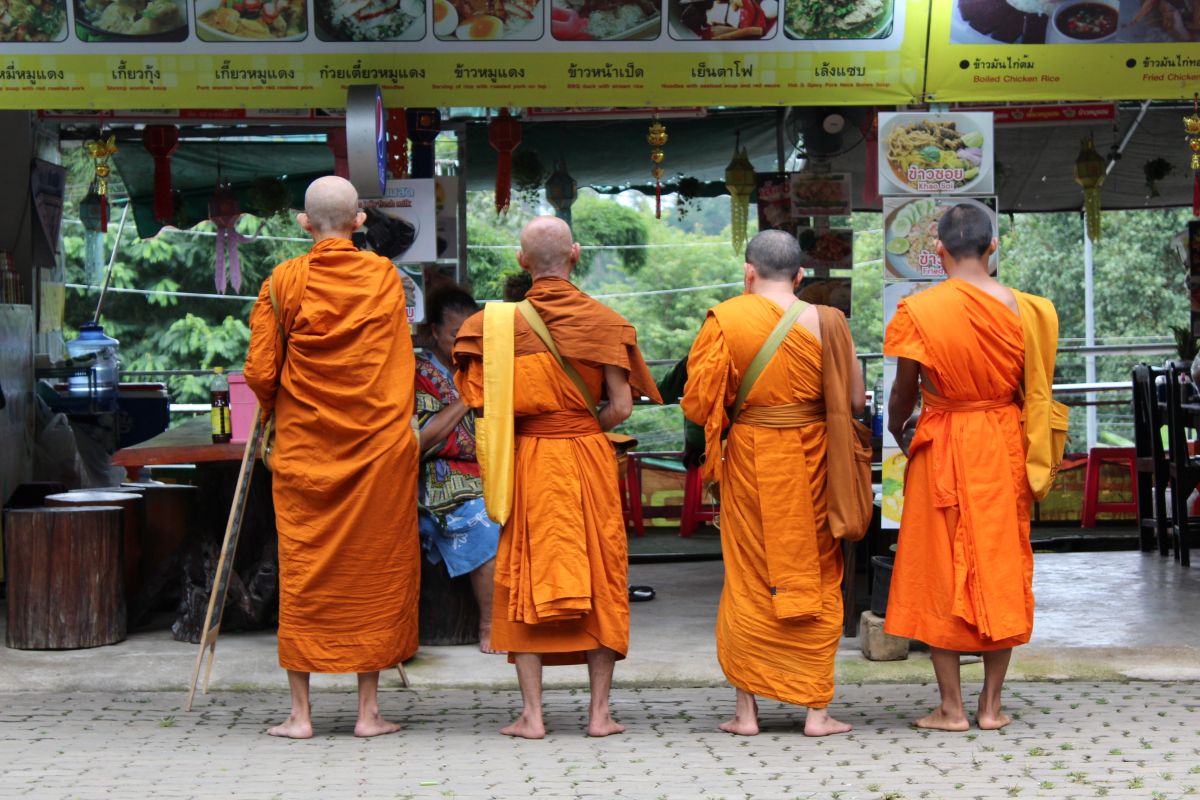
Sipohn handed me a basket of pre-packaged snacks he had prepared for us. I saw others with heaps of sticky rice, drinks, and fresh fruit. The monks, who were dressed in their classic orange robes, lined up from oldest to youngest. Each monk went one by one along the line of donors to accept the offering.
Sipohn told me that before I placed the snack in the monk’s bowl, I should touch it to my forehead, as a gesture of respect and intentionality. The monks walked slowly, person to person, in complete silence. Bringing up the rear were the novices: young boys in training who ended the almsgiving ceremony.
After the donations at the temple itself, the monks walked down the 306 Naga stairs and down into the surrounding village. Without these daily contributions, their monastic way of life would not be able to be sustained.
Beyond the Robes: The Life of a Monk
Along with many other men I had met throughout my time in Thailand, I learned that Sipohn himself was a former monk. This is extremely common for Thai men, as it’s a deeply respected rite of passage. I was surprised to learn, though, that it does not have to be a lifetime commitment to joining the monastery. One can be ordained as a monk for just a few days to a few years.
Boys and men often become monks to earn merit for their parents. In Thai culture, parents believe that if their son becomes a monk, he is securing a spiritual path for them to the afterlife. Even being a monk for a short time is transformative; it is believed that he will understand the world more clearly and think more deeply.
Fast Facts: The Path to Ordination
Age Requirements: To be a full monk, one must be 20 years or older. Anyone younger is considered a novice. Boys as young as 8 or 9 years old can begin training.
The Population: There are between 200,000 to 300,000 active monks in Thailand at any given time.
The Tradition: It is estimated that nearly 70% of all Thai men will join monastic life at some point in their lives.
The Vows: A novice follows 10 tenets, while a fully ordained monk follows 227 strict rules of conduct.
Merit, Tradition, and the Role of Women
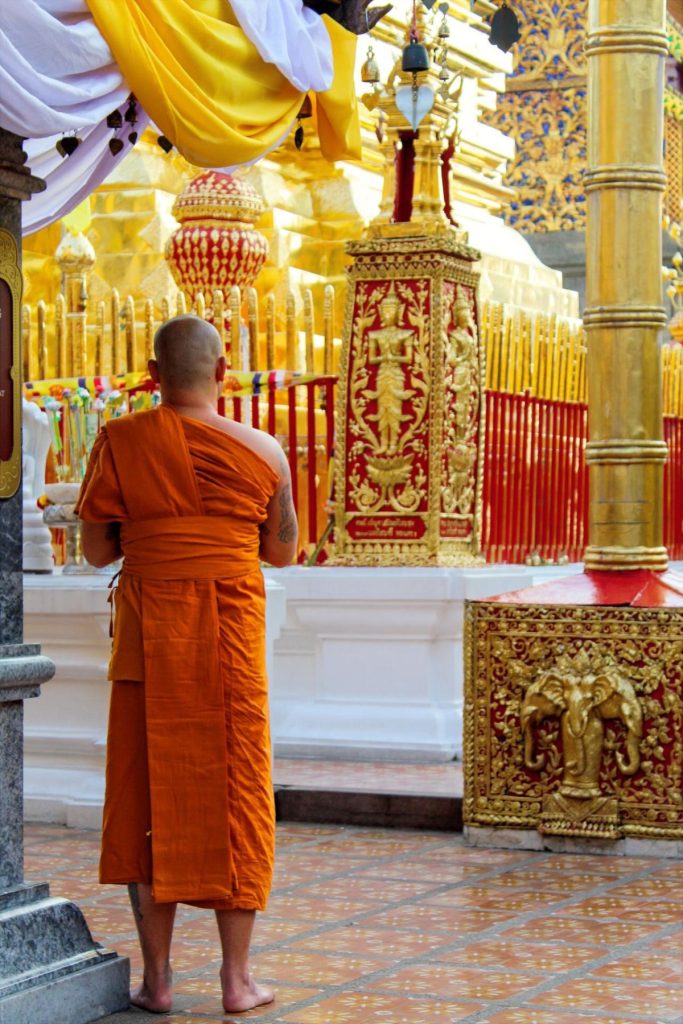
While the orange-robed monkhood is reserved for men, women play a vital role in the spiritual ecosystem too. On the temple grounds, you may also see devout women (called Mae Chi) who are dressed in white. They also live there, follow strict principles, and dedicate their lives to meditation and service. If monks are analogous to Catholic priests, think of Mae Chi as Buddhist nuns. Women also traditionally lead the almsgiving for their households.
This fact kind of explains why Buddhism feels so ingrained into Thai life. It’s not just a religion people practice once per week (can you tell I grew up Catholic?), but it’s an experience that the majority of people (especially men) have personally lived for some time.
The Golden Glow
Once the almsgiving ceremony had finished, we walked back up to the golden chedi. In the short time we had been gone, the sky had transformed; the deep pre-dawn electric blue was replaced by a soft, bright morning light that made the gold leaf of the stupa shimmer intensely.
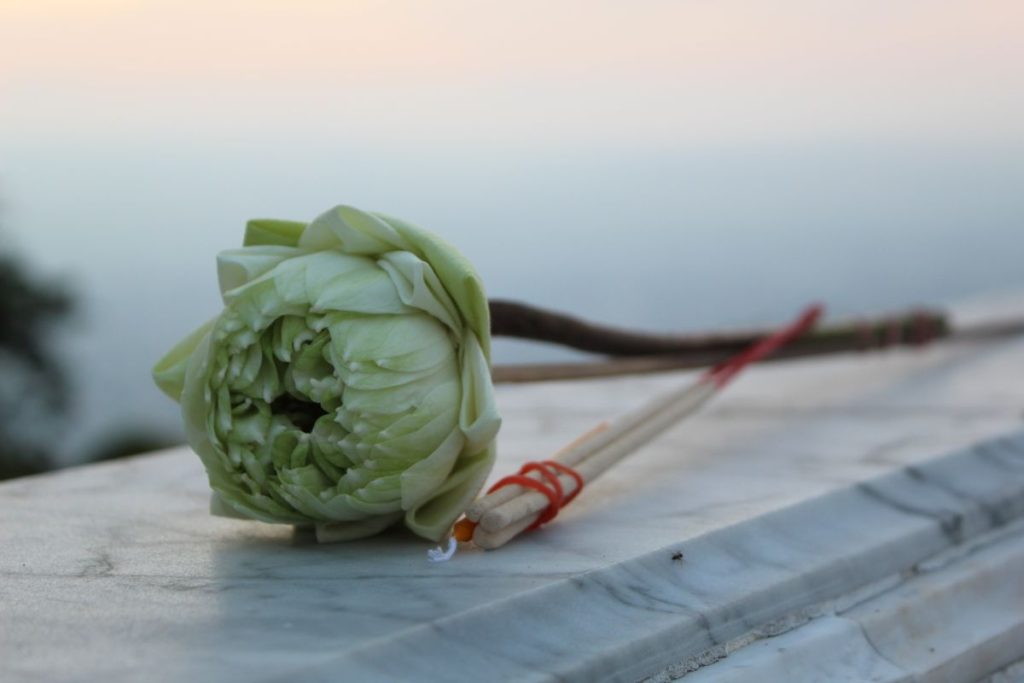
Sipohn led me around the base of the stupa, explaining the sacred tradition of the Pradaksina: walking around the center of the stupa three times in a clockwise direction to show respect. He handed me a white lotus flower and guided me through the ritual.
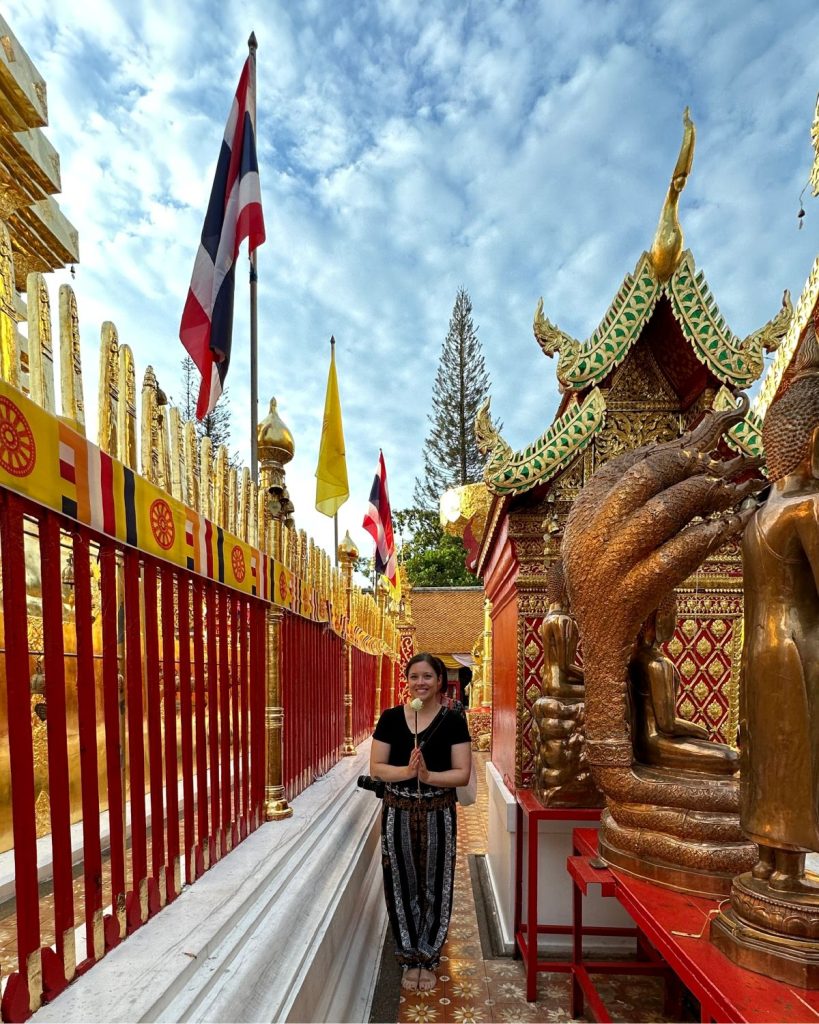
There was a quiet peace in the repetition of the walk. To finish our time on the mountain, I lit a small candle and placed it, along with the lotus, before a gold Buddha statue. It was a simple gesture of gratitude for a morning that had already offered so much perspective.
Wat Pha Lat: The Forest Sanctuary
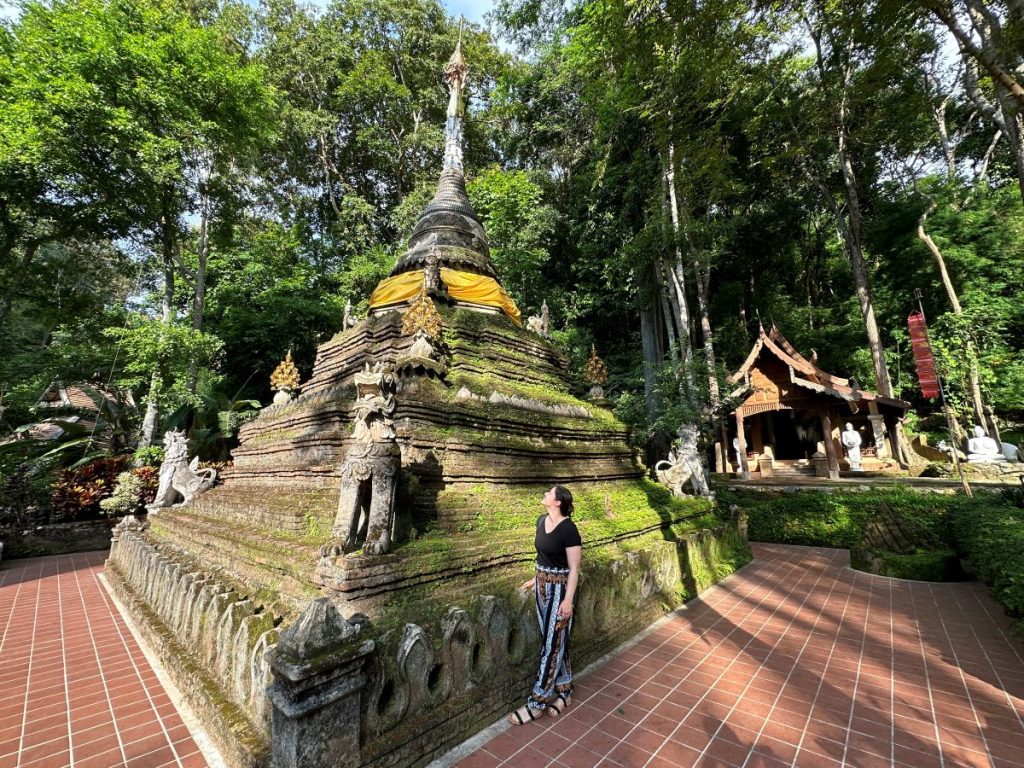
If the Doi Suthep temple is the mountain’s golden crown, Wat Pha Lat is its soul. Most people skip this stop on their way back to Chiang Mai (a fact made clear when we were virtually the only ones there), but Sipohn knew better.
Tucked away in the dense jungle, Wat Pha Lat has served as a peaceful residence for monks, which continues to this day. There were no shiny spires here. Instead, it looked like the ancient stone chedis hadn’t been touched in centuries, slowly being reclaimed by the moss.
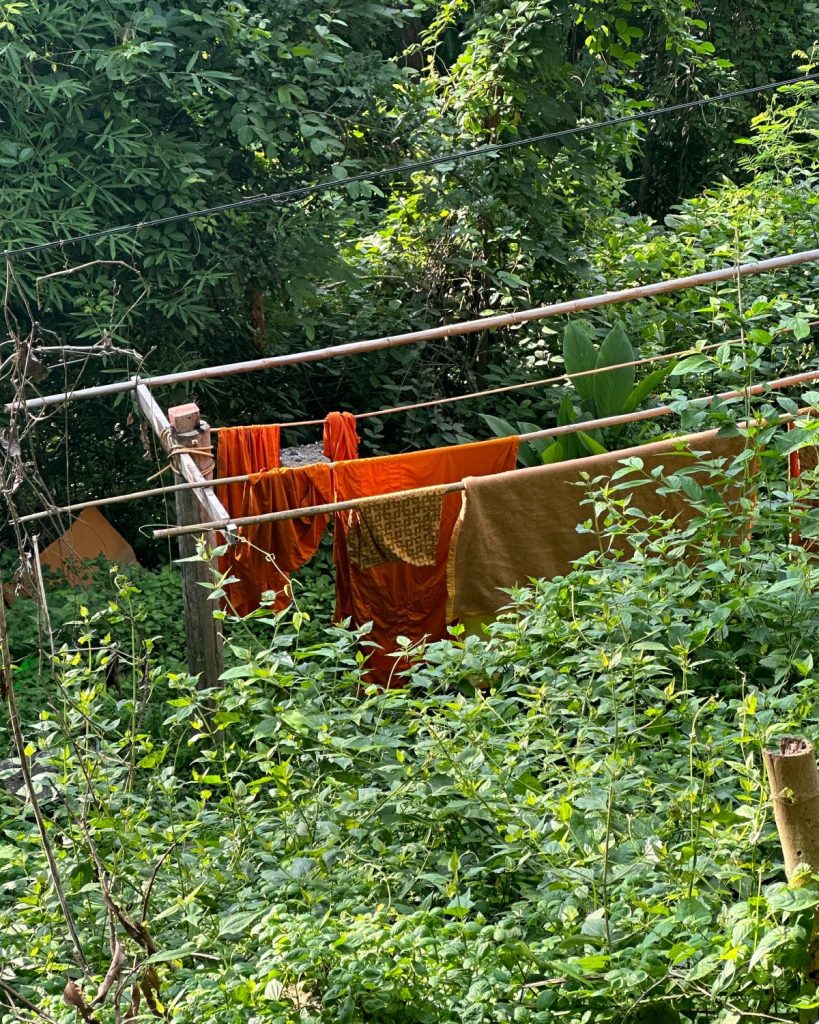
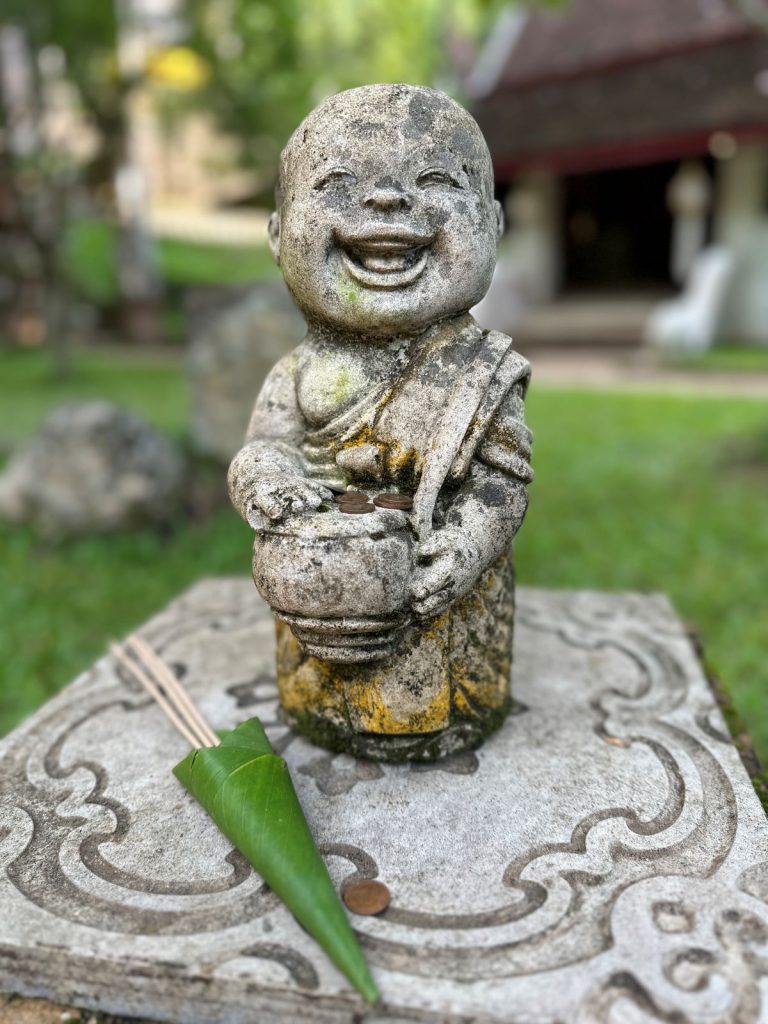
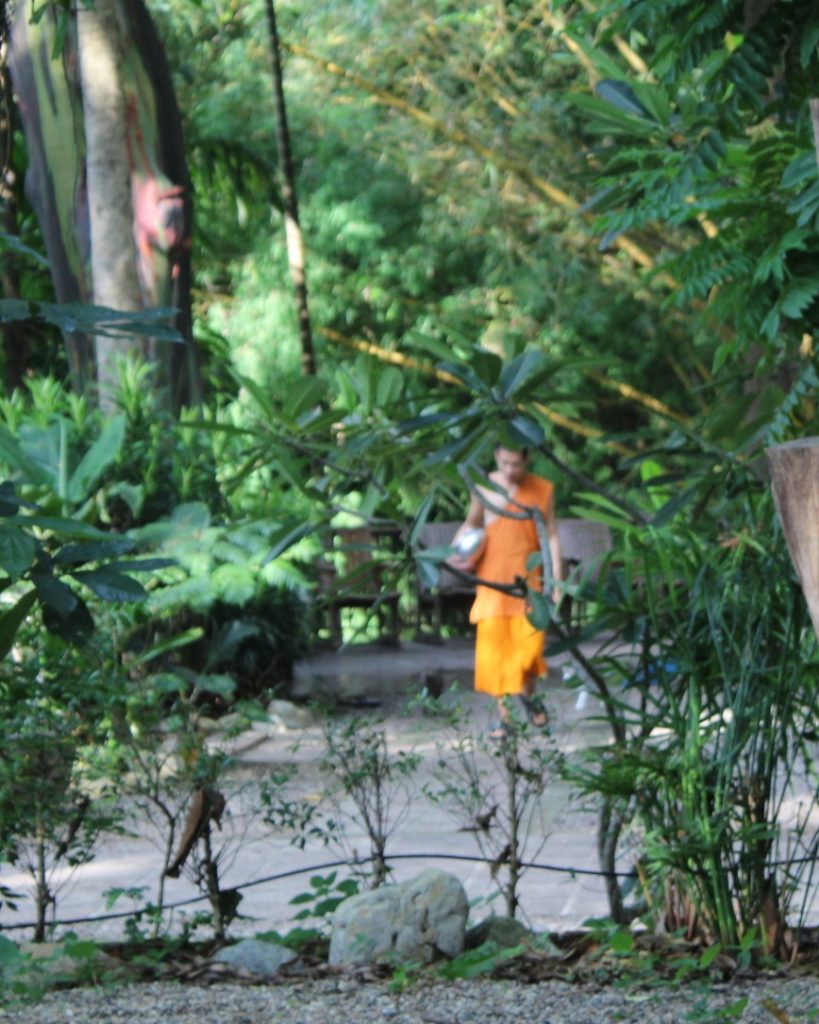
Walking around with no one else in sight, it felt like we had reached a peaceful haven. I saw monks’ robes drying on a clothesline on the hill below, and through the greenery, I noticed a solitary monk in the distance. It was only 8:00 AM; he had likely just finished breakfast. We were surrounded by the buzz of humming insects and towering stalks of bamboo. Statues watched us from every corner: from a happy, smiling young novice to the lion guardian and the sacred elephant.
The Lesson of the Lotus
Spending a morning amongst Buddhist traditions, listening to the melodic chants of monks, offering a lotus flower to the Buddha, and providing alms for the hardworking monks, gave me more than I expected. In the three weeks I had spent in Thailand, I had seen temples almost at every turn and monks all around. From traveling by boat down a canal to doing their daily shopping, I realized that even a life dedicated to the sacred involves the everyday rhythm of chores. Yet I had yet to really connect what it meant to truly take on this vow.
That morning, high above Chiang Mai, I found the breather that I didn’t know I needed. As we walked back to the car at temple Pha Lat, Sipohn pointed out a worn stone, etched with a Buddhist saying. He spelled out the meaning: If we know others but don’t know ourselves, it is as if we know nothing at all.
I doubt that I’ll ever have even a sliver of enlightenment as a Buddhist monk does, but travel does allow for moments when your self-awareness grows. Sometimes, just as the lotus flower grows through the mud and brackish water before it blooms, you just need to find a quiet, contemplative space to slow down and clear your headspace.
Experiencing Doi Suthep Morning Alms: What to Know
The Logistics: While the monks arrive for the actual almsgiving around 7:00 AM, you’ll want to get an early start. I booked an early morning Airbnb Experience (this exact one) that got me to Doi Suthep before dawn. Arriving early means I got see see the sunrise wander around the area completely crowd-free before the ceremony began. Having a local guide was incredibly helpful for navigating the cultural nuances and timing everything perfectly so I wasn’t just guessing in the dark.
What to Wear: This is a sacred religious practice, not a photo op. Modest clothing is non-negotiable. Wear shirts that cover your shoulders and pants/ skirts that cover your knees.
The Offering: If you want to participate rather than just watch, you can buy pre-packaged offering bowls from local vendors near the site. My offering was included in my tour’s price. When offering, remove your shoes, place the item in the monk’s bowl, and bow your head. Women should be careful not to accidentally touch the monks or their robes.
Beyond Doi Suthep: Don’t just head straight back to the city after the gold temple at the peak. The slopes of the mountain hide far quieter, more atmospheric sanctuaries. On your way down, have your driver stop at Wat Pha Lat, the hidden 14th-century jungle temple I also visited on my tour.
Discover more from trishwhotravels
Subscribe to get the latest posts sent to your email.